USA Swimming has released their 2024 audited financial reports, which paint a relatively-rosy picture as compared to the last few years. The organization reports $51.0 million in revenue, a significant increase from 2023 and 2022.
In fact, that’s the best revenue result SwimSwam could find in financial reports back to 2008.
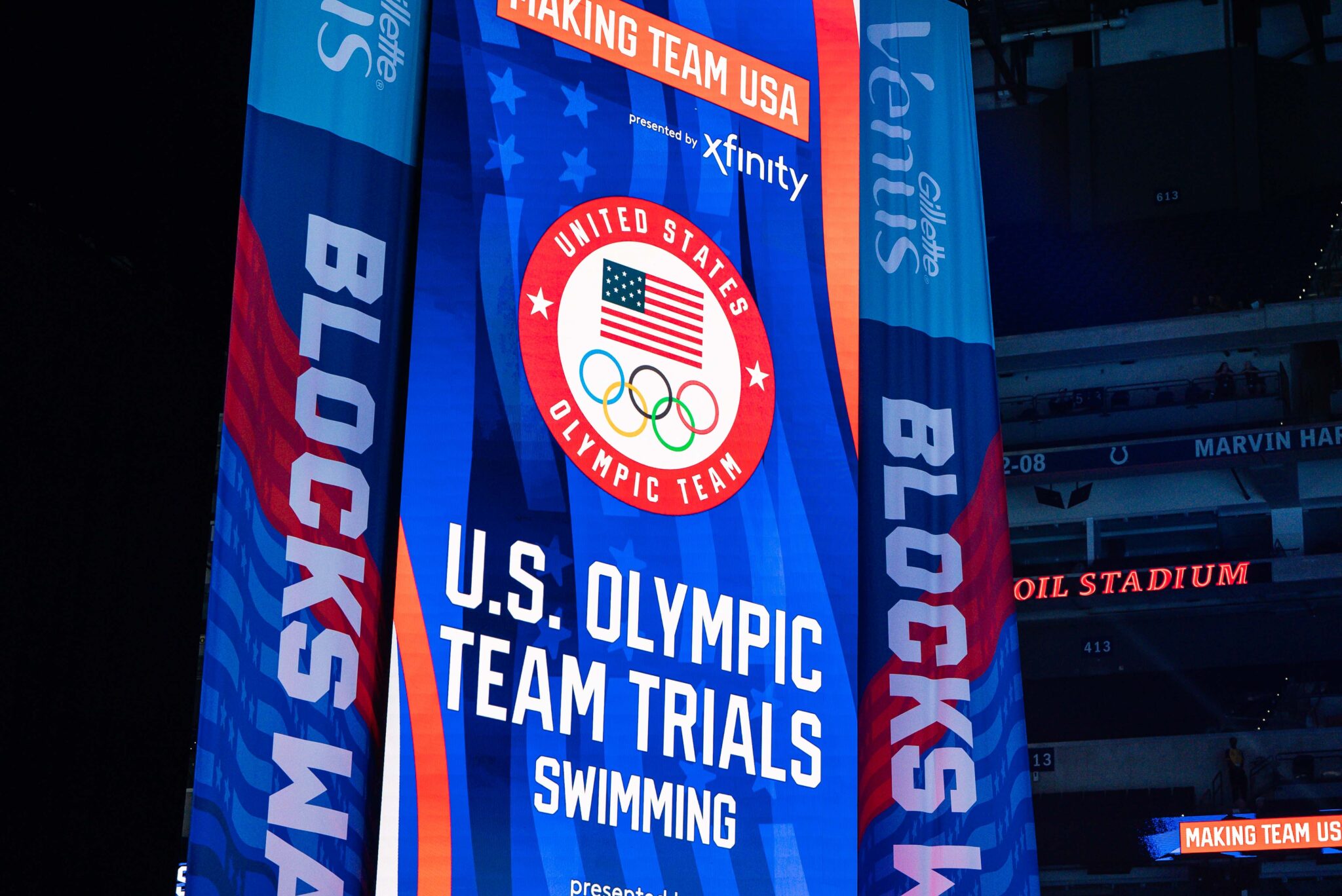
The organization reports that the U.S. Olympic Trials in Lucas Oil Stadium in Indianapolis, the biggest swim meet ever held, generated a $5.1 million profit.
Revenue Growth
While the COVID-19 pandemic can make it hard to compare historical revenue numbers, the $51.0 million in revenue on the financial statements for 2024 is the highest on record since at least 2008 (and likely ever).
That includes a $5.2 million increase in revenue over last year from “Sports & Events Revenue,” which is primarily due to the U.S. Olympic Trials in Indianapolis that saw record crowds of over 20,000 spectators, paying record ticket prices, for multiple sessions.
Other revenue highlights:
- Membership Revenue increased by $910,000, driven in part by a slight increase in membership and primarily by increases in the price of memberships. The $24.3 million in membership revenue remains the organization’s largest revenue pot.
- Partnership Marketing decreased by about $180,000, which is surprising in an Olympic year – but this number may be a bit misleading. Multi-year deals that include trials assets are captured under “Partnership Marketing,” while event-specific partnerships would be captured under the event revenue category.
- USOPC Grand and Contracts increased by $733,000
- Contributions Revenue (donations) decreased by $216,000, which USA Swimming blamed on a “shift in the cadence of the Donor Athlete Partnership Program”
- Operating Revenue, namely excluding investment income and “net assets released from restriction,” increased by about $7.6 million, which is approximately a 20% increase over 2023. That’s better than in 2016 (the last normal Olympic cycle), which saw that number jump by about 15%.
- Contributions of Non-Financial Assets were made up of donations for the Golden Goggles Auction. In 2023, these were valued at $318,000, and in 2024, they were valued at $355,000.
- Swim-A-Thons made a bit of a comeback in 2024, clocking $338,050 in revenue. That’s an increase from the $276,393 in 2023. Those continue to be a very small part of the organization’s total revenue and are still lower numbers than were booked pre-pandemic ($361,920 in 2018).
USA Swimming historical revenue:
- 2024: $51.0 million
- 2023: $45.2 million
- 2022: $29.2 million
- 2021: $42.5 million
- 2020: $36.3 million
- 2019: $46.4 million
- 2018: $34.8 million
- 2017: $43.0 million
- 2016: $39.6 million*
- 2015: $34.7 million*
- 2014: $32.0 million*
- 2013: $32.1 million*
- 2012: $31.7 million*
- 2011: $27.5 million*
- 2010: $26.4 million*
- 2009: $25.2 million*
- 2008: $26.3 million*
*These numbers come from Form 990 tax filings, which may vary slightly from revenue reported on Audited Financial Statements
Investment Returns
USA Swimming’s investment income fell in 2024, but still brought in $4.3 million in revenue to the organization. That’s a decrease from the $5.6 million it generated in 2023, but both numbers are a significant improvement on the roughly $16 million in investment losses the organization reported in 2022.
The long-term investments balance is $49.64 million, implying a 12.3% return on investments in 2024. While a healthy number, that is less-than-half of the annual return of the S&P 500 in 2024. The diversified market-moving index fund returned 25% in 2024.
USA Swimming significantly shifted its assets to money market funds in 2024. Essentially savings accounts, money market yields spiked in 2024 alongside increases in federal interest rates. In July 22, US Money Market Treasury Yields were at 1.58%, whereas by July 2024 they had increased to 5.33%. This offered a significantly higher return on these low-risk investments. In 2023, USA Swimming booked $959,030 in money market funds, while in 2024 they booked $5,916,043 in money market funds.
Similarly, they also increased investments in bond markets and US Treasury securities, which also saw spikes in 2024.
Much of this money appears to have been shifted away from mutual funds.
Expenses Grew Too
Expenses for 2024 grew from $42.3 million to $46.2 million, a 9.2% increase, though that was a smaller amount than by which revenue grew (12.9%). In total, that resulted in a “change of net assets without donor restrictions,” the equivalent to “profit” for a non-profit organization, grew from $2.8 million in 2023 to $4.8 million in 2024.
Expenses highlights:
- Most of the growth in expenses came from program services ($3.2 million) versus “support” services ($650,000).
- Most of the expense growth came in areas that would be expected in an Olympic year: National Team spending (+$2.2 million), Commercial spending ($1.6 million), and USA Swimming Foundation Programs ($370,000).
- They also spent more money on fundraising ($830,000 to $1.1 million), likely an effect of trying to fundraise more around the Olympic Trials and Olympic Games.
- Sport Development costs fell by $50,000 year-over-year, which came with promises highlighting a complaint from coaches around the country. Late last year, the USA Swimming House of Delegates approved a club dues increase, which came with promises to invest that money into sport development programs. Those changes did not take effect until 2025 and so are not reflected in the 2024 financial statements.
- The Executive Expense for the year fell by around $240,000, to a total of $1.4 million, which is likely because of Tim Hinchey‘s post-Olympic resignation and USA Swimming being without a full-time CEO (or a back-fill for interim CEO Shayna Ferguson’s position) for the last part of the year.
- Direct Athlete Support, which takes the form of a stipend to a portion of the US National Team that meets a certain threshold, was $4.2 million in 2024. By comparison, USA Swimming spent around $10.9 million in total on salaries (plus $2.3 million on employee benefits and $694,000 in payroll taxes).
- Both salaries and Direct Athlete Support increased in 2024 by almost exactly the same amount, $650,000. That excludes increases in employee benefits and payroll costs, though.
- USA Swimming spent roughly 30% as much on direct athlete support as they did on employee salaries, payroll, and benefits. Last year, that ratio was about 28%, and in 2018, Tim Hinchey‘s first full year as CEO, that ratio was about 33% (with a higher number meaning a relatively-higher amount of support for athletes relative to USA Swimming staff).
- Direct athlete support in 2018 was about $4.1 million.
- Most of the salary increases for USA Swimming staff was in the Program Services bucket, meaning staff members that more directly work on programs that support the growth and development of swimming in the USA received the bulk of the new spending.
Net Assets
Among the best long-term “bottom line” numbers for the financial health of the organization is its net assets.
The organization, including USA Swimming and the USA Swimming Foundation, has $74.6 million in assets, but also $24.1 million in liabilities, leading to a net assets count of $50.7 million.
USA Swimming’s Net Assets by Year (Including Foundation)
- 2024: $50,501,243
- 2023: $45,017,206
- 2022: $41,278,929
- 2021: $62,777,848
- 2020: $58,062,498
- 2019: $54,457,144
- 2018: $51,157,059
- 2017: $57,710,354
- 2016: $52,562,913
- 2015: $51,710,620
- 2014: $51,935,996
- 2013: $35,938,331
- 2012: $33,077,553
- 2011: $32,385,445
The organization also booked a $6.1 million increase in “total financial assets available to management to meet cash needs for general expenditures in one year,” which is similar to net assets but has a liquidity component because it excludes restricted donations. That number is now about $41.5 million, which is similar to the organization’s annual operating budget.
Olympic Trials
USA Swimming boasted a $5,152,000 “total net organizational profit” from the U.S. Olympic Team Trials. That’s a positive, as there were concerns that the expense of the venue might have led to a dubious financial outcome.
It’s not fully clear what that number represents, as the Olympic Trials were a partnership with the USOPC and Indy Sports Corp, and the accounting for that event is not explicitly laid out. USA Swimming confirmed that the event itself was profitable, but said that the distribution of that profit is “confidential as part of our agreements.”

Be sober about these numbers.
USA Swimming registration was flat during an Olympic year.
Sponsorships were down.
USA Swimming (and, yes, Hinchey) delivered OTs to a football stadium, HOWEVER, they missed the opportunity to fill that stadium largely due weak marketing (and they spent heavily on marketing) and due to eroding relationships with clubs/coaches (the base that we needed to show up).
BIG NOTE: The 2024 Olympic Trials was historic for ONE REASON. USA Swimming in the past could not sell (or program) because OTs was “not” a USAs owned event. OT rights belong to the USOPC. For the first time in our NBG’s history (2024), the USOPC allowed NGBs, like USA Swimming, to sell partners… Read more »
…is it wrong to think Tim Hinchey did a great job? Because the numbers look like he did a great job.
Is this your burner account, Hinchey?
He did a great job of bringing the organization’s revenue back to normal after torpedoing it? Okay. The lifeboats did a great job on the Titanic.
Most of this is thanks to Indy Sports Corp, who did a great job (and always do) with a big event. It’s what they exist for. Tim had basically nothing to do with it. He couldn’t even sell more advertising partnerships in an Olympic year than he did in a non-Olympic year.
Can you imagine? A swimming org not being able to sell more ads in an Olympic year? Big. F’ing. Ouch.
Membership did not grow.
This is the definition of ‘failing upward.’ The thing he did a great job on was partnering with… Read more »
What percent went to the swimmers and what percent went to the bureaucracy?
Phew. Alright, now about that CEO search?
this is great and much better than expected! i think?
predictably theres no discourse about it tho lol