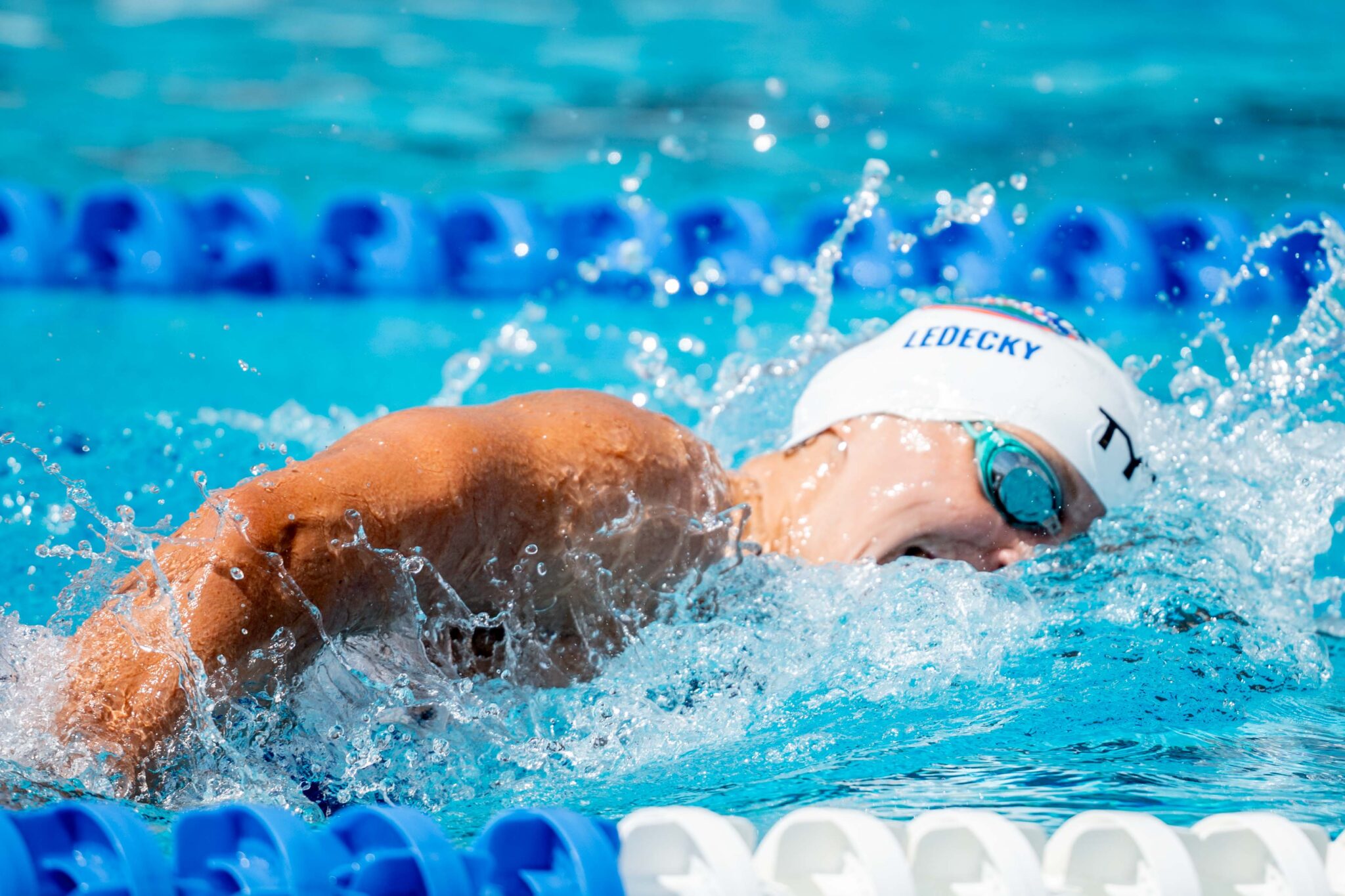
One of the most common questions among freestyle swimmers is:
“Should I always breathe to one side, or should I learn to breathe on both sides?”
The answer is not as straightforward as many swimmers think. While bilateral breathing (breathing to both sides) offers several technical benefits, unilateral breathing (breathing to one side) is also widely used, even at the highest levels of the sport.
Unilateral Breathing
Unilateral breathing refers to taking breaths consistently on the same side, typically every two strokes.
Advantages
- Provides more frequent oxygen intake.
- Feels more natural and comfortable for many swimmers.
- Helps maintain race pace, especially during sprint events.
- Allows swimmers to focus on power and rhythm without worrying about breathing patterns.
Potential Drawbacks
- May lead to over-rotation on one side.
- Can create stroke imbalances over time.
- May place additional stress on one shoulder or side of the neck.
Bilateral Breathing
Bilateral breathing involves alternating breathing sides, commonly by breathing every three strokes.
Advantages
- Promotes a more balanced stroke.
- Improves body alignment and rotation symmetry.
- Develops comfort and breathing ability on both sides.
- Particularly beneficial in open water swimming, where changing conditions may require breathing away from waves, sunlight, or competitors.
Potential Drawbacks
- Can feel challenging for beginners.
- Some swimmers may feel they are not getting enough oxygen.
- Requires time and practice to establish an efficient rhythm.
So, Which Is Better?
For beginner swimmers, learning to breathe on both sides is a valuable skill. It encourages balanced technique and helps swimmers become more adaptable in different training and racing situations.
For competitive swimmers, bilateral breathing can be an excellent training tool. However, during races, many swimmers choose the breathing pattern that allows them to perform at their highest level.
In fact, the majority of elite swimmers—including Olympians Michael Phelps and Katie Ledecky—primarily use unilateral breathing during competition. This demonstrates that there is no single “correct” breathing style for every swimmer.
A Practical Approach
A simple way to develop breathing versatility is to include both breathing patterns in training:
- 25m breathing to the right side
- 25m breathing to the left side
- 25m bilateral breathing (every three strokes)
- 25m normal freestyle
This type of drill can improve balance, body rotation, and overall breathing control.
The Bottom Line
Bilateral breathing is a valuable skill that every swimmer should learn. It promotes stroke balance, body awareness, and adaptability.
However, when it comes to racing, comfort and performance matter most. If breathing on one side allows you to swim faster, maintain better rhythm, and feel more relaxed, there is nothing wrong with using it.
The best breathing pattern is ultimately the one that helps you swim your fastest while maintaining efficient technique.
Learn both. Train smart. Race with what works best for you.
Happy Swimming!

David Marsh taught me to teach breathe every 3 at a young age and then breathe every 5 as they mature; Michael Brooks taught me that big kids need oxygen so “let em breathe”.
Both lessons make sense and I stick to it.
Why one or the other? You can also create a different pattern, one that fits the event or length in the event. Like every 3 until you need more air, then alternate 3-2, and get the benefits of both.
train bilateral – race unilateral 200m and down, 400m and up is dealers choice.
I’m an old masters swimmer who struggles to get enough oxygen. I’ve tried breathing twice every three strokes – it is more air, but takes a while to get used to the choppy fast-rotation feel.
I’ve often wondered if Ledecky ever breathes to the other side in practice – but that’s probably not as relevant to me as I like to imagine.
I breathe R on odd lengths and L on even lengths.
Not just O2 intake – CO2 elimination.
You should breathe most of the way out underwater, right? I always learned not to wait for the breath to exhale.