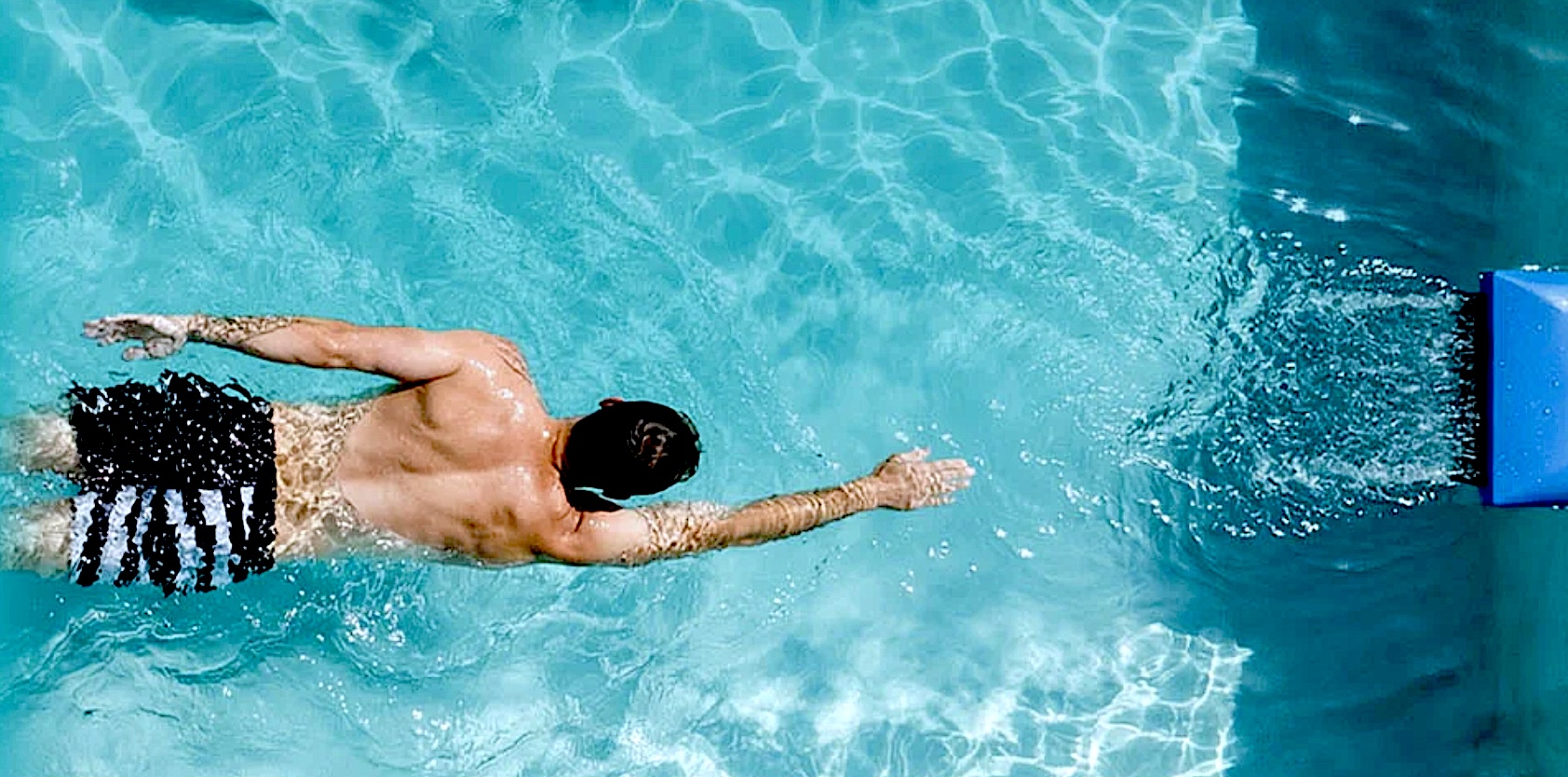
Most backyard pools are built for floating, cooling off, and the occasional cannonball contest. They are not built for real swimming. That is the problem Slipstream solves with enviable success.
The Slipstream P3000 is a portable, battery-powered swimming machine designed to turn an existing pool into an endless swim lane without major construction, electrical installation, or the financial pain that comes with permanent swim-current systems. The unit hangs on the wall of the pool, can be removed, and is designed to create a broader, more even swim current than the narrow, choppy stream swimmers often associate with jet-style systems.
Slipstream lists the P3000 at up to 3,000 gallons per minute, a top swim pace of 1:20 per 100 yards, and roughly 2.5 miles of swimming per battery charge. That puts it in a wholly different category than other jet-style alternatives. This is not just a device that shoots water at a swimmer. Slipstream is positioning itself as a swimming machine.
That distinction matters. A jet can move water, but moving water is not the same thing as creating a usable swim current. A narrow stream can push against one part of the body, create turbulence, and force the swimmer to fight the water instead of swimming through it. Slipstream’s design uses turning vanes and conditioning grills to shape the current into something wider, deeper, and smoother. For a swimmer, that is the difference between wrestling a current and settling into a rhythm.
The specs support the pitch. The unit produces approximately 3,000 GPM, weighs 34 pounds, uses a 24V DC battery system, and requires no pool construction, dedicated plumbing, electrical wiring or permanent installation. The simplicity of setup is a big advantage. Slipstream is designed to hang on the wall of your pool, and you can easily remove and store it when it is not in use. That matters for families sharing the pool, seasonal swimmers, or anyone who wants training utility without permanently changing the look and function of the pool.
The biggest use case is obvious: people who own pools and still drive somewhere else to swim laps. Fortunate swimmers may have a backyard pool, but it’s too short for real training. Slipstream changes the equation by giving swimmers a continuous current to train against.
The pandemic shutdowns also gave swimmers a harsh reminder: access to water is never guaranteed. When pools closed, training cycles broke overnight, and athletes were left trying to preserve fitness with cords, dryland, and hope. Slipstream does not replace a team environment or a training facility, but it does offer something valuable when life interrupts the plan: control. If pool access becomes limited, travel gets complicated, schedules collapse, or another disruption hits your training rhythm, having a real swim-current system at home provides peace of mind.
For triathletes, the appeal is even clearer. Pool swimming and open-water swimming are not the same beast. Open water asks swimmers to hold their stroke and pace without walls. Slipstream’s continuous current gives triathletes a way to train those skills at home. It will not replace race-day chaos, but it gives athletes a practical bridge between pool fitness and open-water specificity.
The customer feedback follows the same pattern. Slipstream’s testimonials page lists a 4.9 rating based on 145 reviews, with 94% of those shown as five-star reviews. The themes are consistent: owners say it makes their pool more useful, gives them a solid workout, and creates more value from a pool they already paid to build and maintain. One reviewer notes, “Absolutely love my Slipstream,” adding that it turned the owner’s pool into something they could “actually swim in and get a great workout.”
That last point is probably the real buying trigger. Slipstream is not just selling hardware. It is selling pool utilization. A backyard pool is often a money pit: expensive to build, expensive to maintain, and underused once the novelty fades. Slipstream gives the pool an additional layer, a job to do. It becomes a training lane, a rehab tool, and a family current machine encouraging kids to spend more time in the water.
There are limitations. Serious swimmers should be realistic. Swimming in place is different from grinding in a 25-yard or 50-meter pool, but for steady aerobic work, technique work, triathlon prep, recovery swimming, or general fitness, Slipstream solves a real problem.
If Slipstream is right for you, the main advantage is its current quality compared to cheaper jet-style alternatives. Slipstream’s own comparison page frames the difference as wide current versus narrow jet. A swimmer does not need water fired at them. Swimmers need water they can swim against.
Slipstream appears to understand that difference. And for a home pool owner who wants to train, get fit, prep for open water, or to turn the backyard pool into something more than an expensive rectangle of blue, the P3000 makes a strong case.
Last but not least, warranties matter for any investment in swim-tech. According to Slipstream’s site, they provide a two-year warranty on the unit and a five-year warranty on the battery.
If you’re interested in Slipstream, see more reviews here.
See Slipstream’s website here.
Follow Slipstream on social here.
SwimSwam is a Slipstream partner for many reasons, including the company’s meaningful industry bona fides. Founder James Murdock was the innovator behind Endless Pools, one of the best-known pioneers in the swim-in-place category. Murdock continues to shape the market and the evolution of swim-current technology.
