As several legal cases are winding their way through the American court system, as of now the NCAA currently has significant limits on what prize money its athletes can and cannot accept.
That made sense in the old world of amateurism, where the goal of the NCAA was to provide a coexistent space for student-athletes to pursue high level athletics while combined with educations that would make most of them more successful outside of their competitive careers.
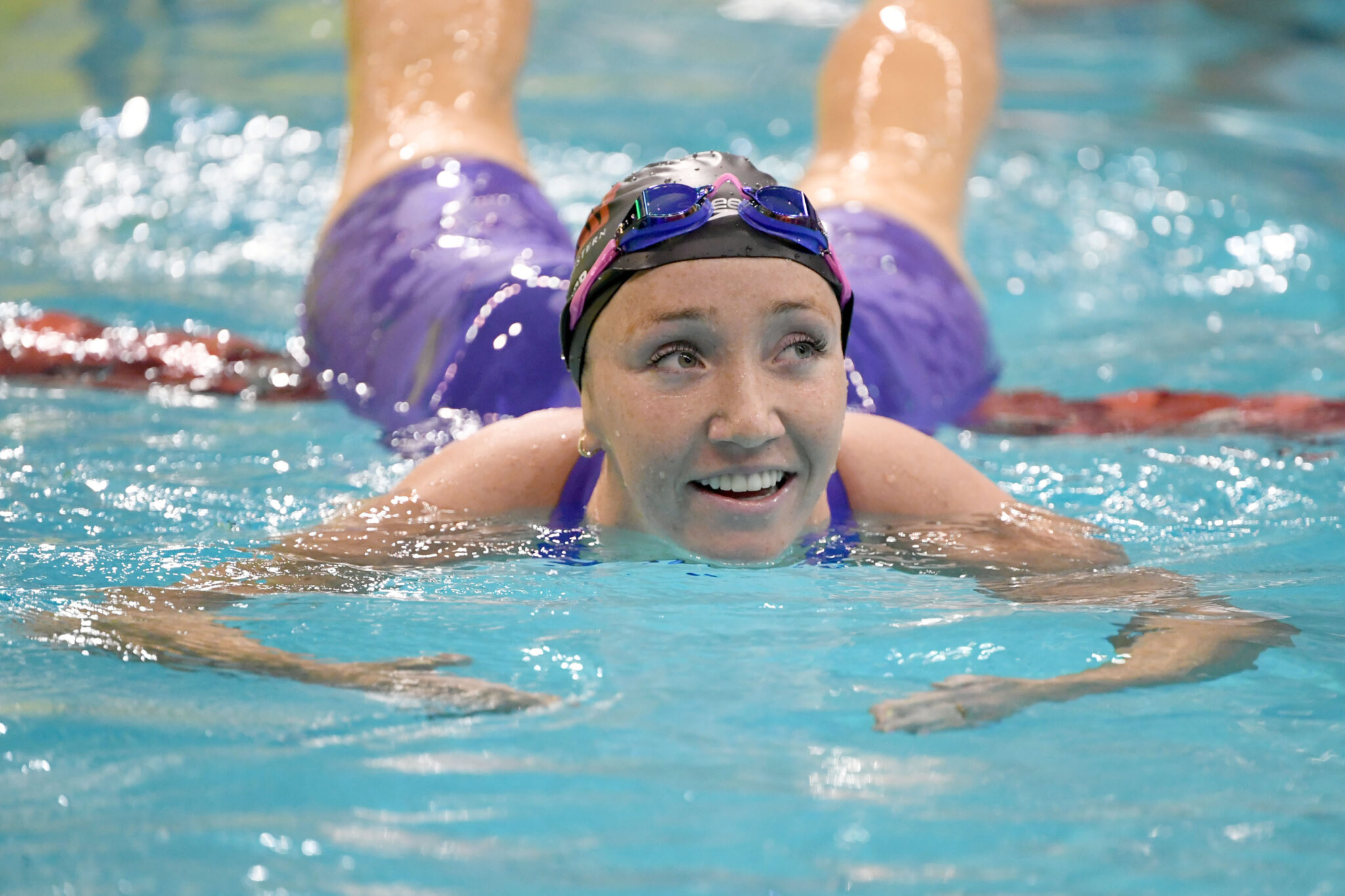
But now that world has changed. The optics of requiring Australian swimmer Lani Pallister to repay all of her prize money (which can’t be more than a low six figures number) to compete in the NCAA while University of Texas quarterback Arch Manning is going to make somewhere north of $6.5 million this year just doesn’t align in any value system.
This is not to say that I’m a “wide open” guy. Far from it. I think collegiate sports were stuck in between a rock and a hard place, where it’s clear that football and basketball players deserved a piece of the pie, but that doing so would erode the best parts of collegiate sports. As much as swimming is facing that already with budget cuts and roster limits, I don’t think we’ve even begun to see the long-term ramifications of it.
I’m not even sure Lani Pallister is the best figure head for this. She is 23 years old and has been clearly competing as a professional athlete for years. But there are better examples, especially in sports like swimming or hockey or tennis, where there is not as clear of a distinction between ‘amateur’ and ‘pro.’
There are, of course, a few loopholes allowing student-athletes to accept prize money. One is that they can accept prize money up to and including expenses. Another is that if the prize money gets funneled through their national Olympic committee, with enough planning, it might not count (which usually hits foreign athletes, where the NCAA pathway is not as assured). There’s also the international student loophole – with lots of college swim coaches expressing that it’s much harder for the NCAA to track money earned by international athletes than by American athletes.
At the end of the day, I think it’s still a worthy fight, for as long as the courts allow it, to prevent true professionalized athletes from regressing in their careers to the NCAA. It would be beside the point for Naomi Osaka or Carlos Alcaraz to parachute in to a college tennis program and take a few classes to be eligible for a semester.
It gets even more difficult to navigate in sports like swimming, where the blur between professional and amateur is so unclear (like at the World Championships, where even a relay will often have clearly adult, clearly professional swimmers racing on the same team as high school students).
I don’t think this is a non-issue either. In many sports, the current levers offer more money for college athletes than they do for pro athletes thanks to the association with collegiate brands and wealthy donors funneling money to top athletes without the expectation of a financial return.
It would be difficult, but I think there are enough smart people in the NCAA to figure this out. Here’s the framework that I would start from:
- Tighten Up Age Limits – This would kill two birds with one stone. It would appease the “stop letting 21 year old foreigners take over college athletics” crowd and would be a backstop to prevent an athlete who has been truly competing as a professional for years from trying to come back to the college system for a full four years of eligibility. The NCAA has tried to control this with “clocks,” but maybe it’s time to just put in a hard age limit.
- Sport-specific regulations – The NCAA is already moving toward letting each sport have more self governance via its sport-specific committees. There are already a number of sport-specific regulations on things like amateurism that I think would surprise all but the nerdiest of college sports fans. We can expand this idea to creating a definition of ‘professional’ that makes sense for each sport. There are some clear cuts in certain sports. You don’t want NBA players coming back to college. In other sports it will take some thinking and creativity. Maybe it’s a prize money cap. Maybe in some sports it’s a certain number of professional events. Maybe it’s a sliding scale of professional events + prize money earned. Maybe it only applies to prize money earned before enrolling, but then allowing athletes to earn prize money while they are student-athletes.
- Designate prize money vs. non-prize Money events – In a sport like swimming, it would not be hard to wrap arms around designated events where athletes can and cannot receive prize money. This would then allow, say, prize money from meets like the World Championships where an athlete is representing their country, but maybe not from events like Brazil’s now-defunct Raia Rapida meet, which was clearly designed as a purely-commercial venture.
At the end of the day, all of these things have legal hurdles, and I still believe that Congressional intervention is the only thing that will ultimately save college sports as we know it today, but it just seems silly to me that a swimmer cannot accept $100,000 in prizes while a football player accepts $6.5 million in pay-to-play and NIL money (that, whether explicit or not, we all know is hinged on him being the starting quarterback at the University of Texas).
It’s time to fix that.

who cares if they make money playing a sport? who cares if the colleges pay them to come play? who cares if the boosters do? who cares if they win prize money? who cares if they make money delivering pizza or investing in the stock market?
If there’s money available, it will absolutely drive competition and more people to stay with swimming. If swimming generates revenue and an athlete is part of that engine, no matter collegiate or otherwise… let them earn money.
At the end of the day the ‘amateur / professional’ distinction is silly. Olympics used to require you to be an amateur. why? why did it matter? why would you not want the best of the… Read more »
Is it possible to ask for the prize money deferred a couple of years?
Maybe world aquatics or whomever the donor is keep the money and give it to the swimmer 6 months or a year after they retire from the ncaa.
Who knows maybe the donor can invest the money too.
This was always a proposed workaround during the true amateurism era, but I guess I’m not sure what this achieves versus taking the money now. Keeps them broke college student and levels the playing field that way?
The System is clearly broken when a football player delays turning professional (paid to play in the NFL) to stay in the college system (NIL) for the sole reason that they will earn more from NIL than being paid to play in the NFL.
It is also very sad that a true freshman at 17 is competing against a 27-year-old because a loophole has been exploited for the 27-year-old to maintain eligibility.
🤣😂🤣
You want Congress to fix this? That seems like sheer lunacy. I am not even talking about the ridiculous partisanship currently crippling our legislative branch.
If Congress gets involved, it can’t ever get un-involved. The member schools crippled their own organization over its own inability to recognize the difference between a star quarterback and a cross-country runner.
What ridiculousness will ensue after football obsessed states like South Carolina and Louisiana dictate the legislation that effects swimmers in California and Indiana?
Colleges need to talk to each other and come up with their own plan that polices themselves. Kenyon swimmers have no business having their life experience dictated by the same organization overseeing Texas football and Kentucky basketball.
For the college athletes that get paid the types of money listed above for football and basketball (~$6,000,000), what obligations do those athletes have?
Commercials, media, press conferences, appearances…
They have to be exceptionally good at a sport that generates billions of dollars.
I would make the argument that earnings is earnings whether its prize money or a national team stipend or a big speedo sponsorship. Isn’t that where we are at? So just take the all the money you can get and compete for your college. Who is going complain?
It is written “The love of money is the root of all evil”. Each person can determine if that is true or not.
Well I’m not sure how else a swimmer pays for massages, food, rent, travel, entry fees, coaching, training etc. -parents are footing the bill usually.
Correct you are Joel – What is your point?
His point is that greed and “love of money” is not the driving force for most swimmers earning money – they’re trying to just cover expenses. Is that really the “root of all evil”?
Could there be some sort of system where all prize money is put into a specific bank account and managed so that any monies “up to and including expense” are able to withdrawn but the rest is saved/invested (that seems like it would be hard to manage and regulate)? Or is that already how this “Operation Gold” works?
I know “limit” is a taboo word within the college athletic world, but there needs to be some kind of rules and standards. Maybe there is some kind of sport-specific salary cap? The college athletes wouldn’t like that but somehow professional athletes have managed all of these years.
Why should there be any limits to prize money? Don’t think that would fly with current legal rulings. NCAA pretending these are amateur athletes is just left over hubris. Do we need to have a current swimmer sue the NCAA or are they tired of losing court cases?