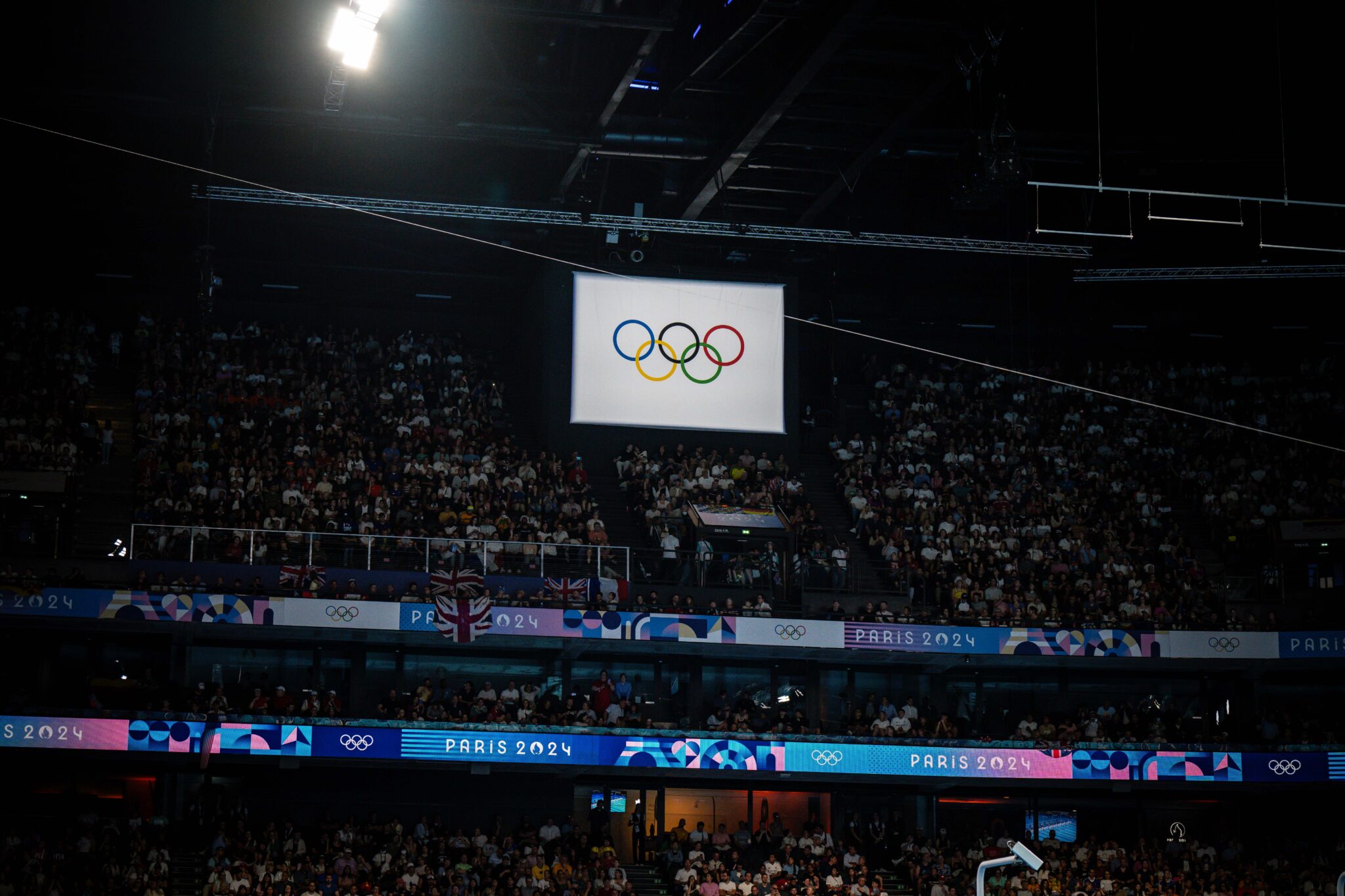
The International Olympic Committee (IOC) has announced a new data-driven analysis to evaluate the sports that will be included in the Olympic program from the 2032 Olympic Games and ahead, which splits sports into their own respective disciplines, with their own athletes and venues, which then makes each sport its own removable subgroup on an Olympics-by-Olympics basis.
Last week, the IOC announced that the Nordic Combined event would be removed from the 2030 Winter Olympics in the French Alps, marking the first time in the 106-year history of the Winter Olympics that the event would not be contested. The IOC noted that the limited number of competitors and lack of public interest were driving forces behind its removal.
British sports journalist Duncan Mackay published a report in the Zeus Files breaking down the new “Fit for the Future” program introduced by IOC President Kirsty Coventry and what it could mean for the summer Olympics from 2032 onward.
Mackay explains that this new program allows the IOC to “remove a particular discipline without having to take the whole sport out of the program, freeing up spaces for others.” In the case of Nordic Combined in the Winter Games program, sports no longer have a sense of security based solely on longevity and history at the Games.
The report also dives into what that could mean for several international federations. Such federations have had “long-term stability they have relied upon,” and they can now be removed from the Olympic program just as easily.
Mackay notes that the popularity metrics used by the IOC focus on broadcasting figures, digital media, public interest, press coverage, and ticketing. Nordic Combined finished at the bottom in 11 of 14 “popularity indicators” used by the IOC in Milan and Cortina d’Ampezzo, and last overall. Mackay also notes that this was the 4th consecutive Winter Olympics in which Nordic Combined finished in that final position.
The Nordic Combined event featured three separate events in 2026, all of which were men-only. Under this new program, Coventry, the first Female IOC president, aims to achieve a more even split between women’s and men’s athletes, as in Paris in 2024 for the Summer Olympics.
Mackay says that the “disciplines that are included or excluded for Brisbane 2032 will be measured by a matrix heavily weighing television numbers and digital media engagement, along with athlete-participation numbers, with venue costs and logistics complexity also factored in and playing a major part in the IOC’s final decision.”
In that same report, Mackay quotes Karl Stoss, the IOC member from Austria and chair of the Olympic Program Working Group, who said that the “process is designed to focus attention where it is most needed.” He also added that many disciplines currently on the Olympic program perform well, and those will not be the events the IOC spends time trying to work on, but rather the ones that “require decision-making.”
In Los Angeles in 2028, the Olympic Games are set to feature 36 sports, four more than in Paris in 2024. However, the IOC is looking to cap the 2032 games in Brisbane at 28.
Mackay cites a variety of sports that could very well be on the chopping block for 2032, including the modern pentathlon, Greco-Roman wrestling, trampoline, and open-water swimming.
With some new sports on the docket for 2028, including Lacrosse, Squash, and Flag Football, all of which are hoping, in Mackay’s words, “will retain optimism… they could be more than one-hit wonders.”
Another sport with a potentially shorter shelf life at the Olympics is Canoe Slalom. However, Mackay admits it “appears safe for 2032,” largely thanks to IOC Athletes’ Commission member Jessica Fox, an Australian triple gold medalist in the event. Though it is among the most expensive venues to build at the Olympics, which contradicts the encouraged mantra of “avoid expensive building projects leaving no legacy.”
This also avoids leaving venues abandoned after the Olympics conclude or a host city facing major financial struggles.
That same idea could be a big plus for other sports, including padel and pickleball, whose popularity has risen sharply in recent times.
Once the IOC has confirmed the Olympic Program for 2032, Australian organizers will then be able to add up to four sports of their choosing.
Mackay points to cricket as almost a guaranteed choice, while another big national sport, Netball, is a primarily all-female sport that aligns with the “gender positive” movement of the IOC.

Break dancing is a really interesting conundrum in this new setup.
Does engagement (universal disdain for the addition but lots of engagement/clicks) = viability? Conventional wisdom says no, but something tells me the IOC says yes.
The “clickbait/ragebait” Olympics of the future?
While the vocabulary has changed, I think that “clickbait/ragebait” has been a/the driver of sports for a long time – at least since SportsCenter debuted in 1979.
I’m not sure the inclusion of breaking in the Olympics was met with universal disdain. I think the disdain was widespread in the kind of communities that are typically engaged in swimming, especially in swimming message boards, but the Olympics are global – and breaking had a ton of positive reviews. There’s a lot of Dunning-Krueger effect going on in the swimming community vis-a-vis breaking.
One of my 5 most viewed Tweets from the Olympics was about breaking, and it had nothing to do with Raygun.
https://x.com/Braden_Keith/status/1822349682116272195
I am a little against this new system if it will change sports from one Olympics to the next (with the exception for the host country sports).
For how many Olympics have this been going on with the host country being able to add a few of their own sports?
Thinking of a sport such as speed skating that requires large buildings, so you end up with limited spectator areas.
I suspect Track & Field, pool Swimming, and Gymnastics are among the most popular sports in the summer Olympic program.