2026 Atlantic-10 Swimming & Diving Championships
- Dates: Wednesday, February 18–Saturday, February 21
- Location: Hampton Aquaplex, Hampton, VA
- Defending Champions: George Washington women (4x); George Washington men (5x)
- Teams: Davidson, Duquesne (women), Fordham, George Mason, George Washington, La Salle, Rhode Island (women), Richmond (women), St. Louis, St. Bonaventure
- Championship Central
- Live Results
- SwimSwam Fan Guide
- Recaps: Day 1 | Day 2
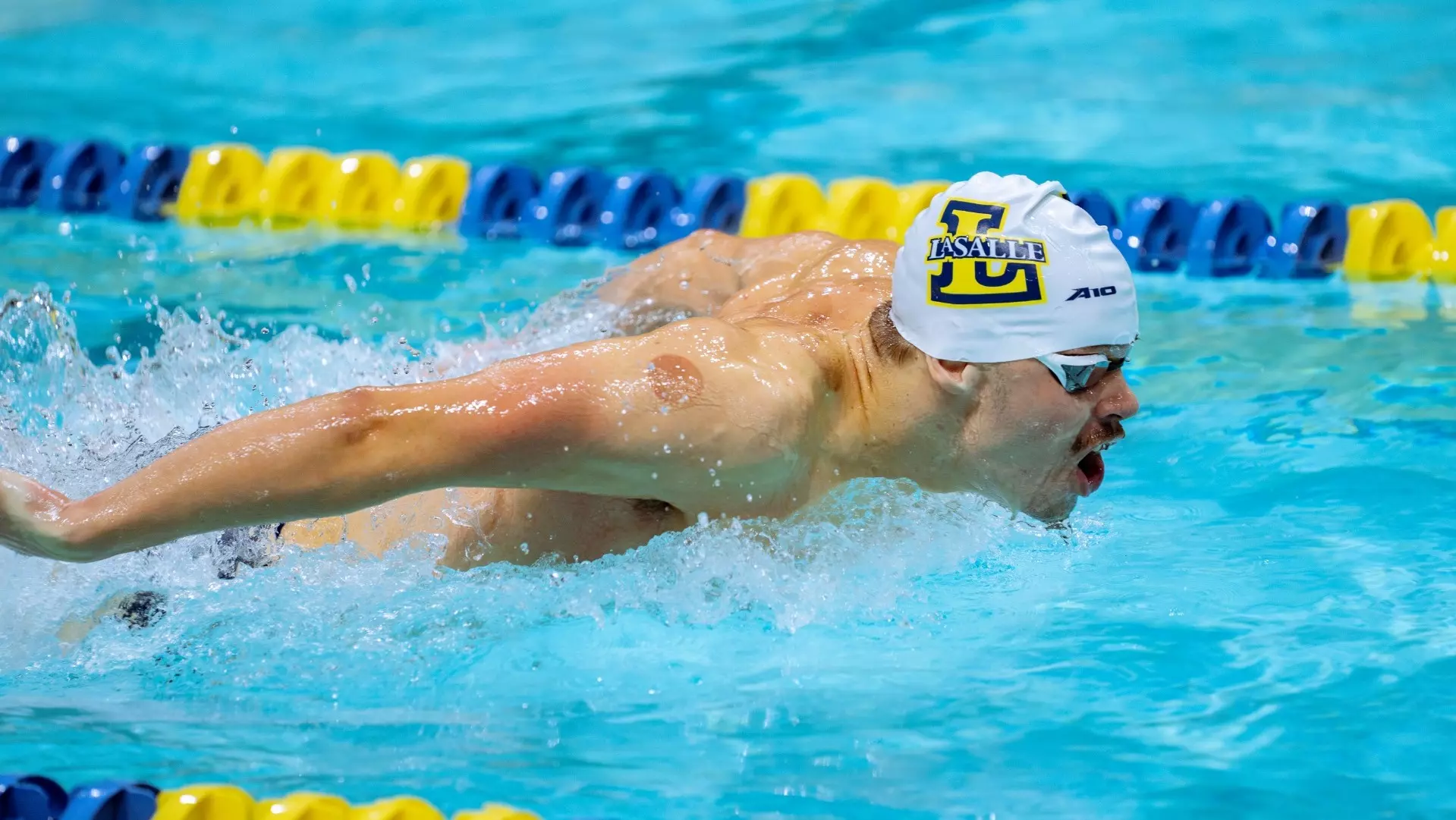
La Salle senior Felix Jedbratt won his 2nd event and several more NCAA Championship Automatic Qualifiers joined the list on Friday at the Atlantic-10 Championships.
Men’s Day 3
Jedbratt, who secured a return trip to the NCAA Championships in the 50 free on Thursday, backed that up with a 45.02 in the 100 fly on Friday. This is the event where he earned an invite last season by simply being among the top 30 men in the country – and his 45.02 from Friday would have earned an invite last year as well.
George Mason’s Aoun Al-Hiari finished 2nd in 45.57, also under the D1 invite time, but without an auto qualifying spot because he finished 2nd. Still, it obliterated his own school redcord of 46.65 from this meet last year.
Jedbratt will be joined at NCAAs by at least two other A-10 men after Friday’s swimming. In the 200 free, Davidson’s Dylan Felt won in 1:33.46. While slower than his A-10 Conference and Meet Record of 1:32.96 set at last year’s meet, it is under the 1:33.93 he needed to secure his first NCAA Championship invite.
That’s a 2nd straight title for the defending A-10 Most Outstanding Performer.
Then in the 100 back George Washington sophomore Holden Thomas won in 46.24, slipping just under the automatic qualifying standard of 46.29. His prelims time of 45.99 was nearly a full second drop from his previous best – he was runner-up last season in 46.97.
Thomas’ swim was one of two wins by young George Washington late in the finals sessions to help the Colonials extend their lead. Redshirt freshman Alessandro Borsato from Italy won the men’s 100 breaststroke in 53.08, using a very fast first 50 to establish a big lead that he held on to on the back-half of the race.
Disaster struck late in the session though. George Washington touched first in the 400 medley relay, but was disqualified because their anchor left early. That gave George Mason the win in 3:08.34, including a 41.98 anchor from Tate Anderson. Other highlight splits included a 44.03 from Jedbratt on the butterfly leg of La Salle’s 2nd place relay.
Fordham grad student David Vargas Garcia won the men’s 1-meter event in 354.15, making a sweep of the men’s springboard events.
A 5-Way Tie?!
Extreme parity in the men’s 100 fly final created some unusual score lines at the end of Fridays session.
George Mason’s Colin Murtaugh, George Washington’s Justin Dostal, and George Mason’s Michael Bock tied for the win in the B-Final in 48.06….and then George Mason’s Derek Dykman and St. Bonaventure’s Joseph Pyon tied for 7th in the A-Final of the same race with the same time.
While not technically a 5-way tie (benefits of swimming faster in prelims), this unusual occurrence has made for a wonky score line.
Men’s Team Scores After Day 3
The late relay DQ did little to interrupt GWU’s dominance of the meet, as they still managed to extend their lead on Friday.
- George Washington – 535.33
- George Mason – 410.16
- St. Bonaventure – 351.5
- La Salle – 317
- Davidson – 274
- Fordham – 239
- Saint Louis University – 229
Women’s Day 3
The team battle was the full focus on day 3 of the women’s meet. In the opener, Duquesne put down a big hammer to declare the battle ‘on’ with a win in the 100 fly from Ashley Freel in 53.58. She held off a furious final 50 from La Salle’s Cecilie Frost, who finished 2nd in 53.57.
Duquesne had three swimmers in the A-Final, while Richmond had only one scorer period, which gave the Dukes a 48-3 advantage in that race alone.
While Richmond didn’t win any events on day 3, they again used depth to hold serve after that 100 fly, with top finishes from Caitlyn Hughes in the 200 free (3rd – 1:49.30) and Presley Baber in the 100 breast (2nd – 1:02.06).
After Duquesne snuck into 2nd place in that 100 fly, George Washington clawed back their status in part thanks to a win in the 100 breaststroke from sophomore Natalie Sens. She touched in 1:01.29 to surpass her high school best for the first time.
La Salle, meanwhile, had a huge day where they were good. After three women in the A-Final of the 100 fly, Gabriela Herbreder finished an IM sweep by winning the 400 in 4:15.21. That was a more-than-six-second drop for her.
La Salle also picked up a win to close the day in the 400 medley relay, with the team of Rosalia Marin Martinez (55.43), Carlota Ungo Quero (1:02.02), Cecilie Frost (53.64), and Victoria Fenn (49.17) finishing in 3:40.26.
Certain gaps are keeping La Salle at arm’s length from the team title battle, though. For example, they scored no points in the 200 free.
A team in a similar position is Saint Bonaventure. They picked up a pair of wins on Friday, in spite of ending the day in 5th place (they were 6th before Fordham DQ’ed their 400 medley relay).
Anna Forjan won the 200 free in 1:48.75, a second-and-a-half drop from her previous best at the 2024 championships. She didn’t swim this event at last year’s A-10 Championship.
She then pulled off the dirty double by coming back to win the 100 back in 53.92, which again was a best time and improved upon her swim from the 2024 championship. In true Hungarian fashion: in years where she’s done this double, she’s performed better than the year when she didn’t.
Team Scores After Day 3
A huge final day battle is brewing with the top four teams being separated by just 75 points heading into the final day of competition.
- Richmond – 399
- George Washington – 376.5
- Duquesne – 355.5
- La Salle – 324
- St. Bonaventure – 237
- Fordham – 229
- Rhode Island – 163
- George Mason – 148
- Davidson -130
- Saint Louis U – 91

What a joke. A –0.01 reaction time for GW’s relay would be acceptable anywhere else in the world. It’s embarrassing that the organizers cut corners at a conference championship meet.
That’s not how that works.
Every brand of touchpad has a setpoint where it has been tested and evaluated that a swimmer can still be in contact without registering enough pressure.
Some are .00. Some are -.03. Some are -.04.
I don’t know what brand is being used at this meet, but this is not an “official’s decision” or “cutting corners,” it’s just the rules. Any other meet using this brand of pads would also DQ a -.01.