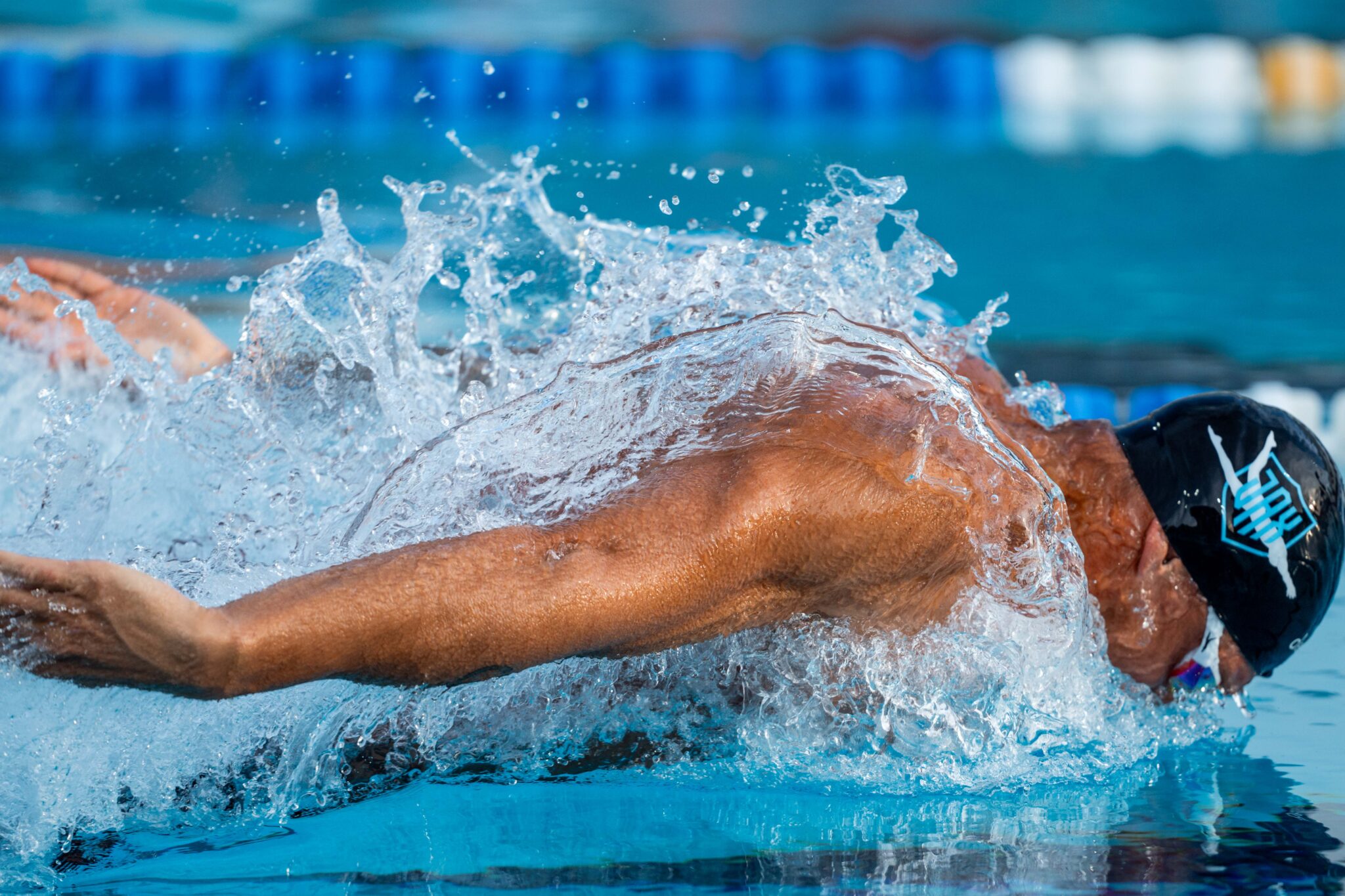
Swimming fast on race day means that you’ve piled up the hard work in the months leading up to competition.
Showing up on those early mornings when you are sore and tired. Sticking to the technical details each time you hit the water. And getting a gold star based on your awesome attendance record.
And then there is taper—a period that flummoxes and frustrates many a swimmer (and coach). It’s a time to fine-tune and sharpen your performance, and this taper sprint set is designed to do just that.
It’s short in terms of yardage, but highly focused.
Swimmers kick off each round with some resisted swimming to potentiate their muscles, add some overspeed work to raise tempo, and then give their body a chance to mash both into a dive effort.
Here is the set:
Assistance + Resistance to Boost Sprint Speeds
2-4 rounds:
- 15m swim at ~90-95% effort with moderate resistance (chute, tubing, etc)
- 60s rest
- 15m fast swim overspeed (towed via tubing)
- 60s rest
- Dive 15m swim all-out
- 3 minutes rest between rounds
Set Notes:
Chase higher stroke rates and increased force output
Stacking resistance (higher force output) and overspeed (higher stroke tempo) challenges swimmers to max out both on the dive 15m swim. Sprinters rely on higher stroke rates to traverse across the length of the pool on race day, and overspeed training can give swimmers’ tempo a bump.
Balance with resisted swimming so that you retain stroke length—overspeed training can increase tempo but can also lead to reduced stroke length (Girold et al., 2006). Swimmers should look to be towed on the overspeed work and not use fins or paddles as the goal is increasing stroke frequency (fins, paddles tend to do the opposite even though they are technically overspeed tools).
This set works at both ends of the tension between frequency and force, and by the time you get to the dive 15m your body will be primed to self-organize for maximum speed.
Prime the stroke
The goal isn’t to get stronger but to wake up the neuromuscular system and then drop that increased activation into higher stroke tempos.
These types of sets are a lot of fun because they are short in yardage and fast, but they shouldn’t turn into a conditioning session. The goal is to prime your stroke.
Full rest between rounds
Take full rest between rounds–the goal is waking up and priming the nervous system, not leaving the pool a fatigued mess. IF you feel your stroke starting to degrade, either increase rest or abandon the set.
Choosing # of rounds
Number of rounds depends on how far you out from competition, and the work you did prior to taper (gotta earn that taper, after all!).
Do 3-4 rounds two weeks out; 1-2 rounds competition week.
ABOUT THE AUTHOR
Olivier Poirier-Leroy is a former national-level swimmer, 2x Olympic Trials qualifier, and author of several books for swimmers, including YourSwimBook, Conquer the Pool, and Tapering for Sprint Freestylers.
 The book is a 98-page eBook packed with actionable insights and research into what makes an explosive taper unfold on schedule. Everything from duration to taper type to managing your dryland to navigating the mental ups and downs of tapering for sprinters.
Tapering for Sprint Freestylers combines evidence-based insights with a collection of 15 ready-to-go sets (plus the “regular” versions to better understand how they scale down), a Taper Blueprint to plan your taper like a pro, and a 12-week sample resisted sprint program to show you how all the principles come together.
No more guesswork or hoping for taper miracles.
Show up on race day explosive, fast, and dangerous.
👉👉👉 Learn more about Tapering for Sprint Freestylers
