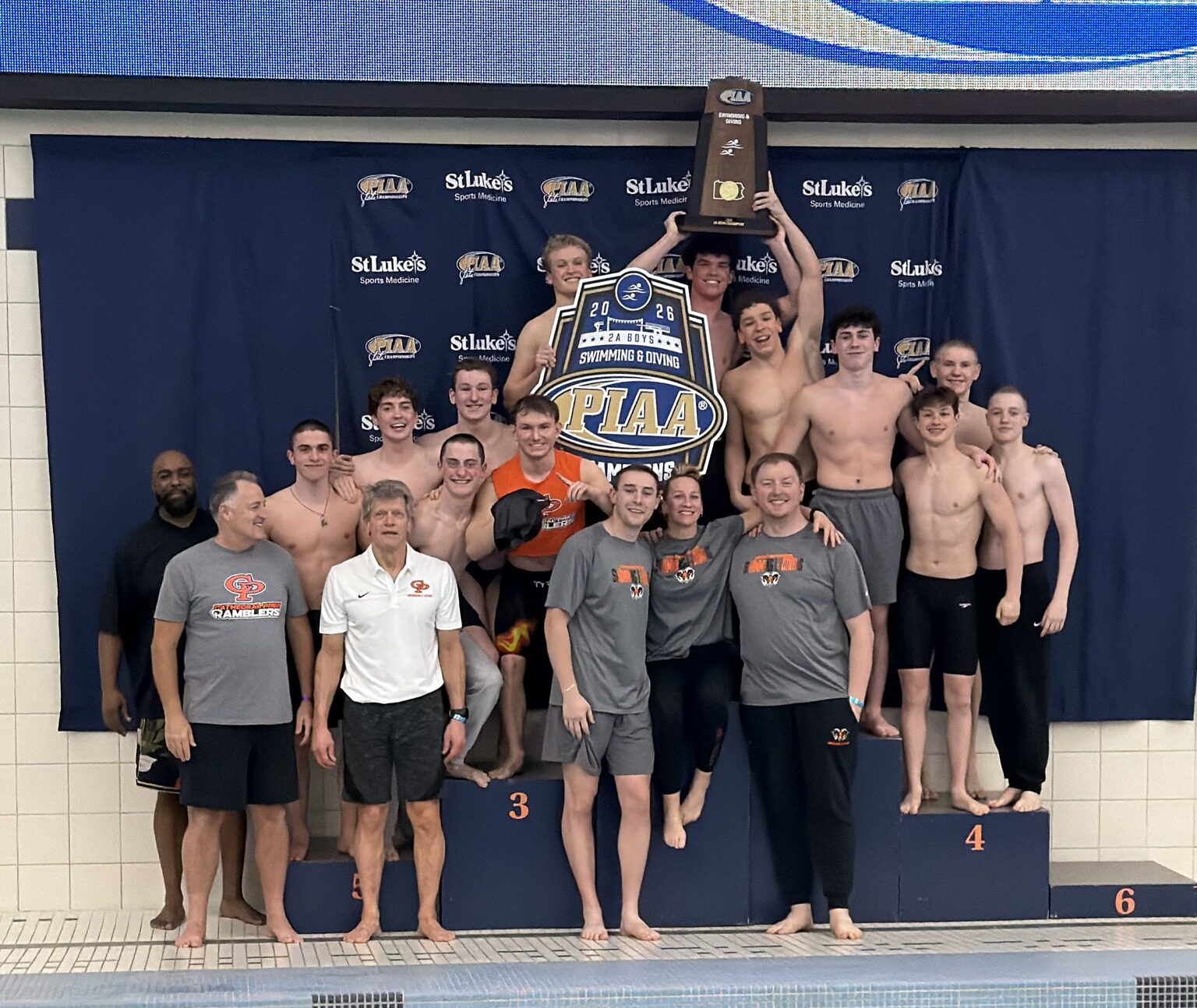
The Pennsylvania Interscholastic Athletic Association (PIAA) has added an agenda item to its May 13 Board of Directors meeting: separating private and public schools in high school athletics competition in the state. This follows the introduction of Senate Bill 1253 into the Pennsylvania legislature to require separate playoff and championship classifications for “boundary and non-boundary schools.”
That would separate traditional public schools, aka “boundary schools,” from “non-boundary schools” like private schools and charter schools.
The country has a patchwork of state-by-state policies as to whether public and private schools should be combined. While many states (including Texas, mostly) separate them, mostly, others (like Michigan and California) combined them.
There has been building momentum to separate public and private schools in Pennsylvania. These decisions are mostly driven by team sports like football and basketball, where private schools are able to amass powerhouse rosters, though the same can happen in sports like swimming.
Alabama recently decided to separate public and private schools into separate classifications.
In Pennsylvania, the PIAA includes almost 1,500 schools. They are separated into classifications, ranging from two classifications (boys volleyball, swimming) to six classifications (football, basketball), depending on participation rates. Classification is currently based on enrollment.
PIAA has been talking about separating classifications since at least 2007. Private schools were first admitted in 1972.
Both 2A state titles (smaller schools) were won by private schools in March. Cathedral Prep in Erie won the boys’ championship and Shady Side Academy near Pittsburgh won the girls’ crown.
In Class 3A, both titles went to public schools: North Allegheny in the Pittsburgh suburbs won the boys’ title, while Upper Dublin High School near Philadelphia won the girls’ title. The top of the 3A tables were largely absent private schools, with La Salle College High School being the most notable exception as the boys’ runners-up.

A lot of the powerhouse privates are already in the inter-academic league like germantown and Penn charter
In recent years the haverford school and Malvern prep have put out much better swimmers than either Penn charter or Germantown
I’m a big fan of sports reform. And, the people that got us into these weird times are least capable of fixing matters.
Switch to NJ HS Style – dual meet tournament is electric – every swimmer has a role. Huge spectator turnouts especially in early rounds when higher seeds host tournaments at their high school/ local pools. There’s a reason why jerseys breeds clutch swimmers.
This is long overdue. I remember years ago a St Joe’s prep swimmer won a PA state title but was a NJ resident. Private schools have a tremendous advantage being able to recruit the best of the best.
I really think the different divisions are unnecessary. I grew up swimming in CA though, where it’s a battle royale
Divide And Compete How Novel
“For something to be continuous, its parts must not just touch but become unified at their boundaries…
A continuum is not “actually” divided into infinite parts, but it is potentially divisible without limit…
…continua (like a line or time) cannot be composed of indivisible points or “atoms” because, as extensionless points, they cannot form a magnitude.”
The “Artificial” take on Aristotle
And what does the body say?
High School Swimming should one meet for all schools and all divisions with a scoring system allowing for a public school champion and a private school champion. Nothing worse than watching a meet with a D1 final and a D2 final in the same event where the top two swimmers are in different divisions. Those kids should battle each other for the individual event state title. Division based final heats for relays could make sense, but individual events should be not be separated.
Or they could just do what California does and get rid of all of the Size Divisions. Let the best team win.
You have divisions in the CIF sections which really equate to a state championship meet. CIF southern section. (Bigger than some states). Has 4 divisions. The state meet yes has a single division but it also allows every CIF section to participate regardless of speed.