The University of Wisconsin-Madison Athletic Department operated in a $4.3 million surplus during the 2025 fiscal year. The department had $197.9 million in revenues and $193.6 million in expenses.
Total Revenues By Sport
Football accounted for 57% of revenues, with $113.6 million and was followed by men’s basketball ($19.9 million), men’s ice hockey ($4.06 million), and women’s volleyball ($4.06 million). All other 16 sports combined totaled $8.51 million in revenues.

Total Surplus/Deficit By Sport
In addition to bringing in the most revenue, football and men’s basketball were the only two teams that operated in a surplus during the 2025 fiscal year. Football had $41.50 million in expenses, resulting in a $72.08 million surplus, and men’s basketball had $12.43 million in expenses, resulting in a $7.44 million surplus. All other sports operated in a deficit, with men’s tennis, men’s golf, and women’s golf having a deficit of less than $1 million. Women’s basketball ($4.39 million), women’s rowing ($3.23 million), and women’s ice hockey ($3.15 million) had the greatest deficits.
| Football | 72,082,630 |
| Men’s Basketball | 7,437,854 |
| All Others Combined | -34,151,202 |
| Not Related To Specific Teams | -41,072,045 |
Swimming and Diving Revenues/Expenses
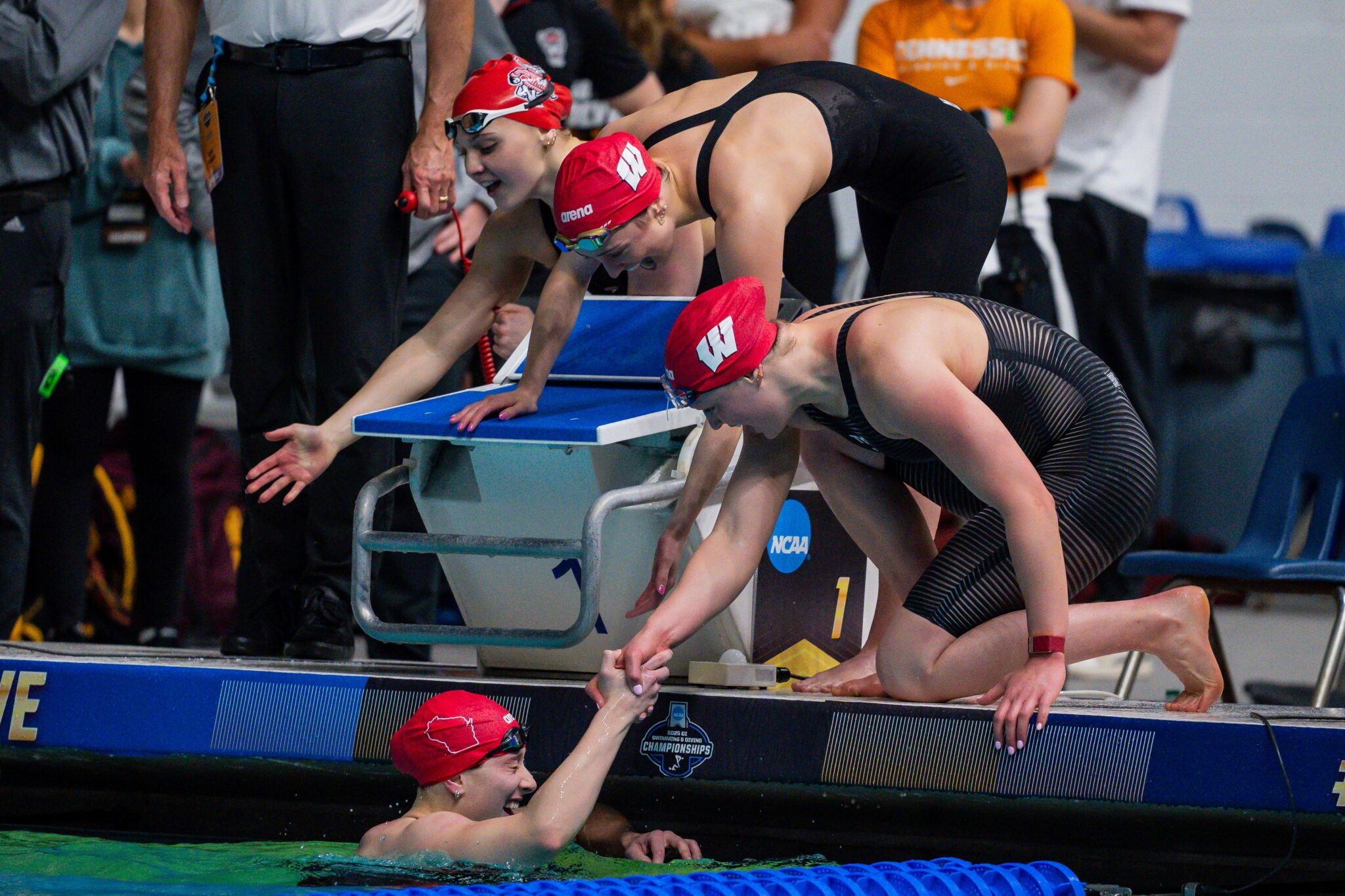
When looking at surplus/deficit numbers, men’s swimming and diving operated as the #12 sport in the department while women’s swimming and diving operated as the #15 sport (out of 20 total).
Deeper looks into swimming and diving show that both programs had ~50% of their revenue come from “Direct Institutional Support.” This is defined as:
“Input direct funds provided by the institution to athletics for the operations of intercollegiate athletics including:
- Unrestricted funds allocated to the athletics department by the university (e.g. state funds, tuition, tuition discounts/waivers, transfers)
- Federal work study support for student workers employed by athletics.
- Endowment unrestricted income, spending policy distributions and other investment income distributed to athletics in the reporting year to support athletic operations. Athletics restricted endowment income for athletics should be reported in Category 17″
| Total Operating Revenues 2025 | Total Operating Expenses 2025 | Surplus/Deficit | Direct Institutional Support | Revenue Without Direct Institutional Support | Surplus/Deficit Without Direct Institutional Support | |
| Men’s Swimming and Diving | 471,502 | 2,247,163 | -1,775,661 | 236,466 | 235,036 | -2,012,127 |
| Women’s Swimming and Diving | 580,662 | 2,501,285 | -1,920,623 | 332,724 | 247,938 | -2,253,347 |
Overall Revenue/Expense Trends For Wisconsin Athletics (Last 5 Years)
Wisconsin Athletics was in a $20.17 million deficit for the 2021 fiscal year, although that can primarily be attributed to COVID-19. Since then, the department’s surplus has only been growing.

Wisconsin’s Full FY 2025 Report
- See page 41 for Total Operating Revenues
- See page 75 for Total Operating Expenses
A few items to note:
- Although Wisconsin lists men’s rowing as a varsity program on its website, it is not reported as a standalone NCAA men’s championship sport in federal and NCAA financial disclosures. As a result, its revenues and expenses are included in the “Others” category.
- NCAA athletic departments typically have their fiscal years run from July 1 of the year prior to June 30 of the reported year (ie: July 1, 2024-June 30, 2025)

Very interesting! Thanks Anya
I’d be curious to compare a school like Wisconsin to one like Indiana after their recent football success. I know their administration is very keen to support their teams with some big $, compared to Wisconsin, where we don’t feel the same.
Indiana would be a cool one. I haven’t seen anything about them yet. It also doesn’t seem like they release their full report which is what is useful for the analysis (same with Rutgers). If anyone is able to find the 90+ page reports for IU/Rutgers, feel free to link it.
So far for FY 2025, I’ve been able to find Minnesota, Iowa State, Tennessee, and Virginia Tech.
I am looking forward to Ohio State’s….here is the OSU one from 2024: https://news.osu.edu/download/433afdc8-737e-4298-8004-a5fc8ca5dac4/fy24ncaamembershipreportfinal.pdf
OSU and Indiana are going to good ones. Louisville would be an interesting one as their Basketball program is one of if not the top revenue producing Bball team.
Those numbers don’t add up (113.6/150.1 total = ~75%, not 57%). Football generates 75-76% of the revenue. Maybe 57% is a reversed typo? (or I haven’t had enough coffee yet)
113.6 football/197.9 total, 47.8 million is “Revenue Not Related To Specific Teams”
I see what you mean. However, that calculation underestimates the contribution of football.
The majority of income in “Revenue Not Related To Specific Teams” under NCAA financial reporting guidelines is strongly (if not directly) linked to football (sponsorships, media rights, etc.). You could estimate that football contributes the same relative contribution to this revenue as the sport-specific metrics. Therefore, football contributes ~75% of the athletic pie regardless of if you break it up by sport-specific or total lines.
Beat Minnesota by 80 btw
Part of the reason you see Athletic budgets rarely make any money is that programs (each individual athletic team within an athletic department) is incentivized to spend every single cent that is allocated to their budget to prove that they in fact do need their entire budget and then some so that they have a leg to stand on when it comes for the next year’s budgeting season.
While this obviously exists in normal business conditions, the problem is exacerbated in college athletics when budget mindfulness isn’t rewarded, but consequently you get punished because “you didn’t need your full budget last year so we won’t be raising your budget this year”
Oscar explained that best to Michael Scott in The Office. Wisconsin Athletics may just get $8 for their lemonade stand next year.
WI football has taken such a nose dive I’ll be interested to see how this looks going forward. The stadium, especially when the weather got cold, was not close to full
Alcohol sales helped bridge the gap
Please feel free to give me feedback on data that you might find interesting in the full report that is linked and might want more detail on for my next case study.
Also, if anyone is interested in reading my research this past summer on the “Conference Realignment and the Rise of the SEC: How The SEC Became The Leader In Collegiate Athletics” feel free to message me on LinkedIn.
https://www.linkedin.com/in/anya-pelshaw-8379b2208/
Now do Rutgers…. Who announced a major deficit this week..
(When do the Hinchey jokes start?)
What does this mean