Courtesy of Athlee, a SwimSwam partner.
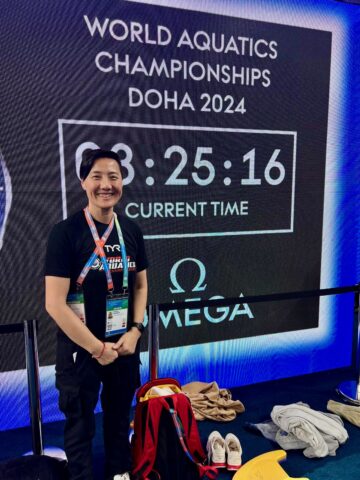
Having made her national senior swim team at the age of just 13, Abi Liu knows a little about the needs of young women competing at the top level in the sport. The joint Team USA swimming coach for the recent medal table-topping World Junior Championships performance won the 200 backstroke silver for China at the 1994 Asian Games and has subsequently coached Team USA standouts Skyler Smith and Piper Enge.
This time out, Liu’s young women’s team brought home nine of the ten gold medals that Team USA won in the World Juniors, with Rylee Erisman and Audrey Derivaux putting in standout performances. This strong showing proves that the Bellevue Club Swim Team coach is a talented team-builder, but experience has also made her a firm believer in treating each swimmer as an individual.
 Mindset reset
Liu’s winning formula dictates getting to know what makes her swimmers tick, even before she sees how they perform in the water. Although she likes them to know what to expect from her, too.
“I like to make that personal connection and understand the athletes as humans first,” she says. “We sit in the dining hall after a meal and I ask them about school, about who they are, what their secret sauces are, how they prepare, how they calm their nerves. I think it’s important for them to know who I am, too, rather than just a coach figure. It makes the work on the pool deck more effective.”
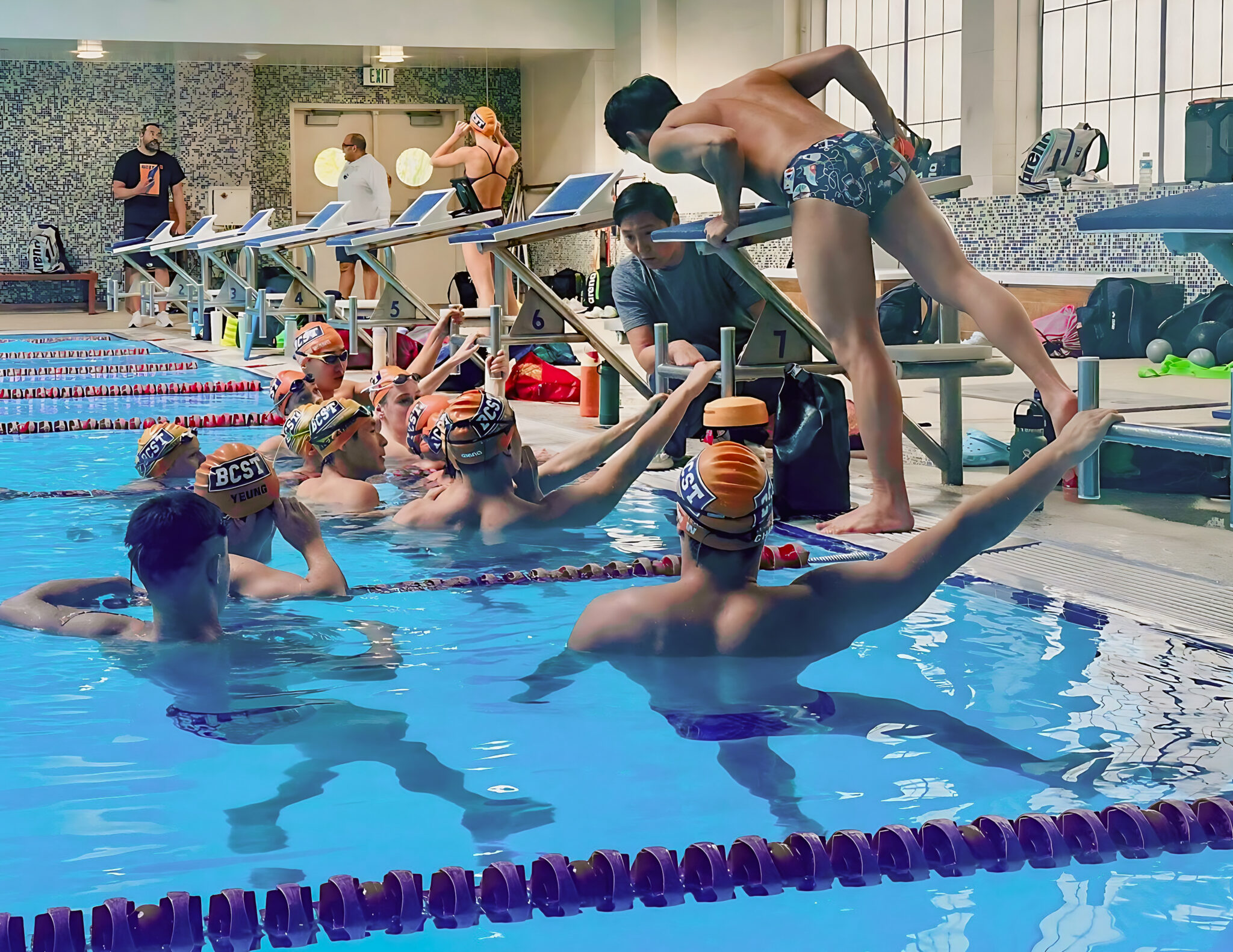
When it comes to work in the pool, Liu likes to use underwater video to track the movement and, especially, the breathwork of her swimmers. For her, breath is key to everything, from positioning to power.
“I specifically use video to train breath, especially in sprint freestyle,” she says. “The breath manipulates the body position, and in sprint we want the head to move independently, away from the body, take that quick breath, move and come through. If their core is not strong, or they don’t know how to move, they just throw their head all over and that breaks the alignment. The camera shows them that and I get them thinking about how to exhale properly when their face is in the water, so they can inhale more effectively. That allows them to get a little bit of bubble elevation from the chest.”
Owning the process
Liu swears by the value of video to allow the swimmers to take control of, and responsibility for, their own growth. This means she can flip the script on feedback, and she likes to hear how those she is coaching feel they did before offering her opinion. She believes that the split screen delays that the Athlee camera offers allows them to do this with confidence.
“I want to be a listener before I talk,” she says. “I think Athlee gives our athletes enough information on the screen, so they come back and say ‘I did these things really well, and I think I need help with these things’. That becomes a team thing, rather than pointing fingers. Their feedback is probably more important than mine. I’m not them. They give that honest and raw feedback and I really have to take note of that.”
Power rests and a slice of pie
Something else that Liu has taken note of is her athletes need for rest and for family time. This brought her to one of her most contentious coaching red lines, and that is giving her teams Christmas off. Many teams use the break to ramp up activity towards the ‘100 100s’ – the dreaded 10,000m stamina test made up of 100 x 100m intervals. But Liu is a big believer in rest, as well as being fair to families.
“We take those seven or eight days completely off,” she says. “We prioritise that family time. In the beginning of the season, we’ll sit down with the families and say ‘these are the times you can take family vacation, but these are the times we need you to be here’. The other thing I do every fourth week is give the kids the two morning practices off. It gives them something to look forward to. Both of these are pretty controversial, but it has worked really well for us.”
A good deal of Liu’s inspiration comes from her mentor Jack Roach, who built the Team USA Juniors team as its director from 2008-2013. He gave her the impetus to see everyone as an individual and taught her the value of what seems like the slightest rethink in linguistics when it comes to prospects and future stars.
“What was the biggest revelation for me personally, is that he replaced the word ‘expectation’ with ‘anticipation’. Performance is always relative, and it depends on how fast other people go or how slow other people go, and they are fleeting. However, the things you actually learn, let’s say you now can do five underwater dolphin kicks off the wall. You now can do a perfect streamline. Those are things are always staying with you. That’s actually a long-term growth.”
Strongest together
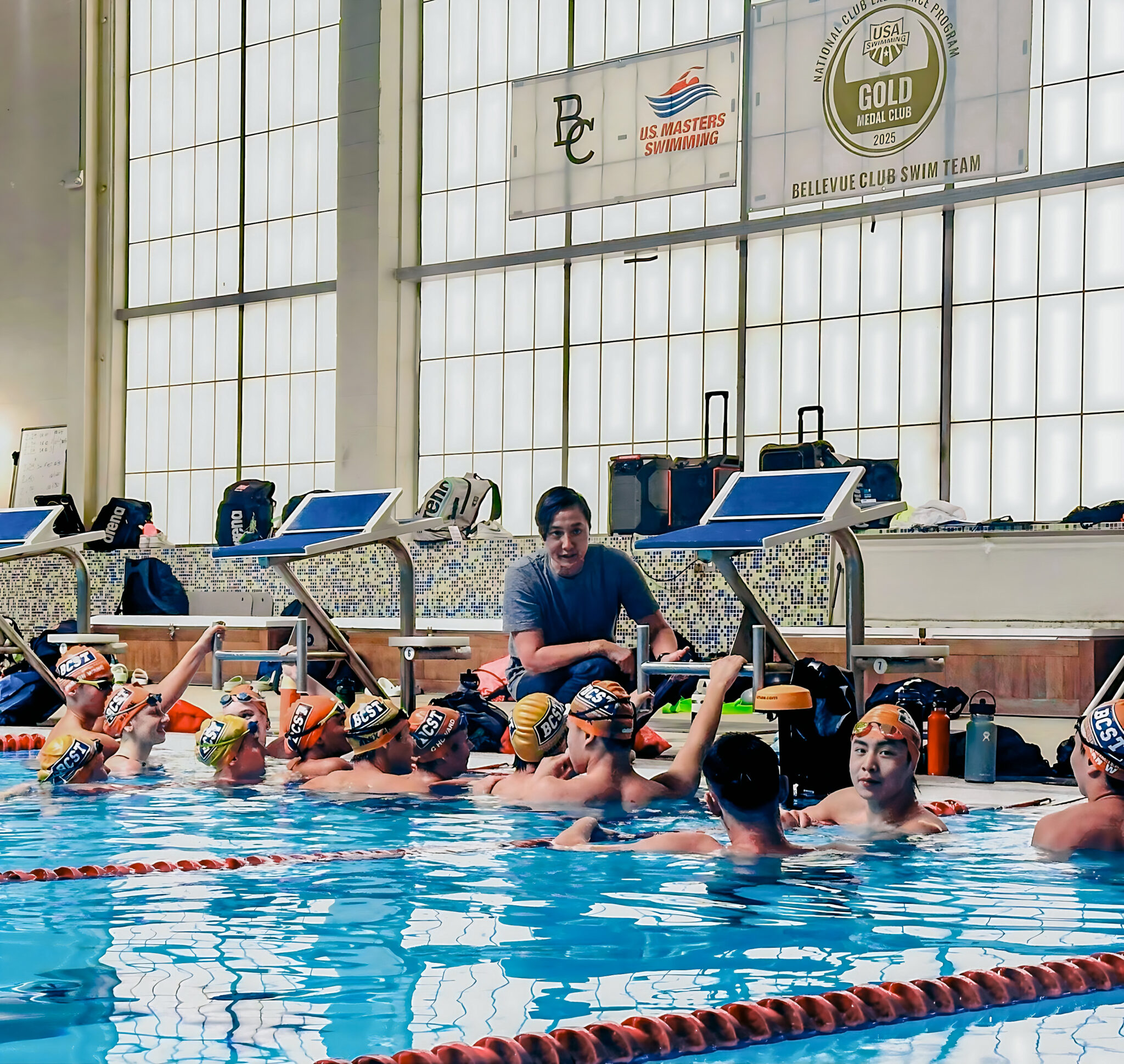
Despite her focus on the individual, Liu always drills the importance of teamwork into her coaching, especially when on training camps with the national team. Inclusivity and a welcoming atmosphere are a big part of her philosophy, but she also ensures that everyone in the room knows that no individual is bigger than the team.
“We have one goal, and that’s make our team better before any one person is better,” she says. “We are here for the same reason. We’re on the same team. I think one of the first thing we get out of the way is this is not about me against you. It is about us, all getting better, together.”
She strongly believes that Athlee is an important tool for those coaching young women, who are often finding that their body is changing even faster than their personal best. Besides body image issues, Liu finds that the camera is perfect when it comes to correcting the shifts in stroke that come with growth spurts.
“With girls from 14 to 18, the physicality changes are marked,” she says. “Someone can grow an inch per month, so their centre of gravity can change all the time, meaning their balance is always off. If they don’t know how to approach that, see it and adjust then you’re constantly in a battle. So, this gives them that knowledge, and even if they go off to college and they work with different people that kernel of knowledge is always there.”
If you want to know more about how Athlee helps coaches to tailor training for each athlete, as well as shaping training programmes for anyone from juniors starting out to elite athletes, then please visit www.athlee.com to book a brief online demo.
NB: Abi Liu’s participation in this interview is entirely independent, and she is not compensated by or affiliated with Athlee.