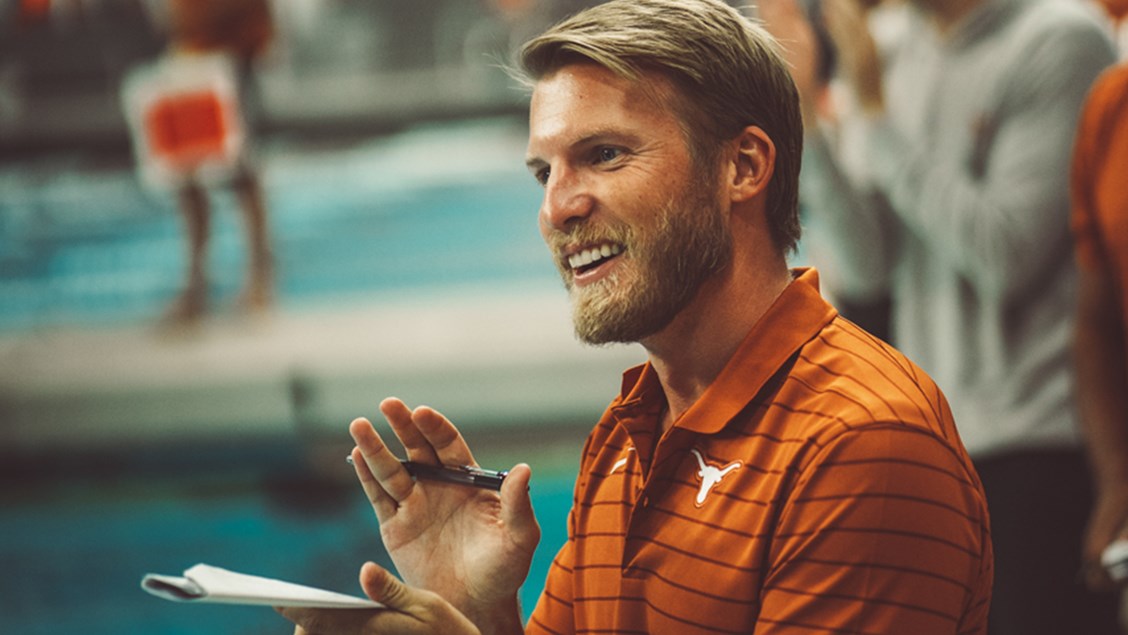
Courtesy: Paul Walker
My favorite moment of last year’s Olympic Trials wasn’t a world record or a photo finish—it was the men’s 200 IM and the medal ceremony. Texas pros Carson Foster and Shaine Casas had just gone one-two. Shaine’s emotion at the finish knocked the oxygen and a few tears out of me.
As the swimmers marched out for the medals, my eyes weren’t on the athletes. They were on the coaches—Eddie Reese and Wyatt Collins—standing just off the podium. It was Eddie’s swan song. And it was Wyatt’s quiet farewell.
As a team, the two had just closed one of the most dominant runs in U.S. swimming history: five NCAA team titles, three runner-up finishes, seven Olympians, and 24 swimmers on international teams. Wyatt had risen from student-athlete to volunteer to Associate Head Coach at The University of Texas (I once calculated he put in 10,000 hours before ever drawing a paycheck). And then he walked away.
 Not to another deck. To a studio.
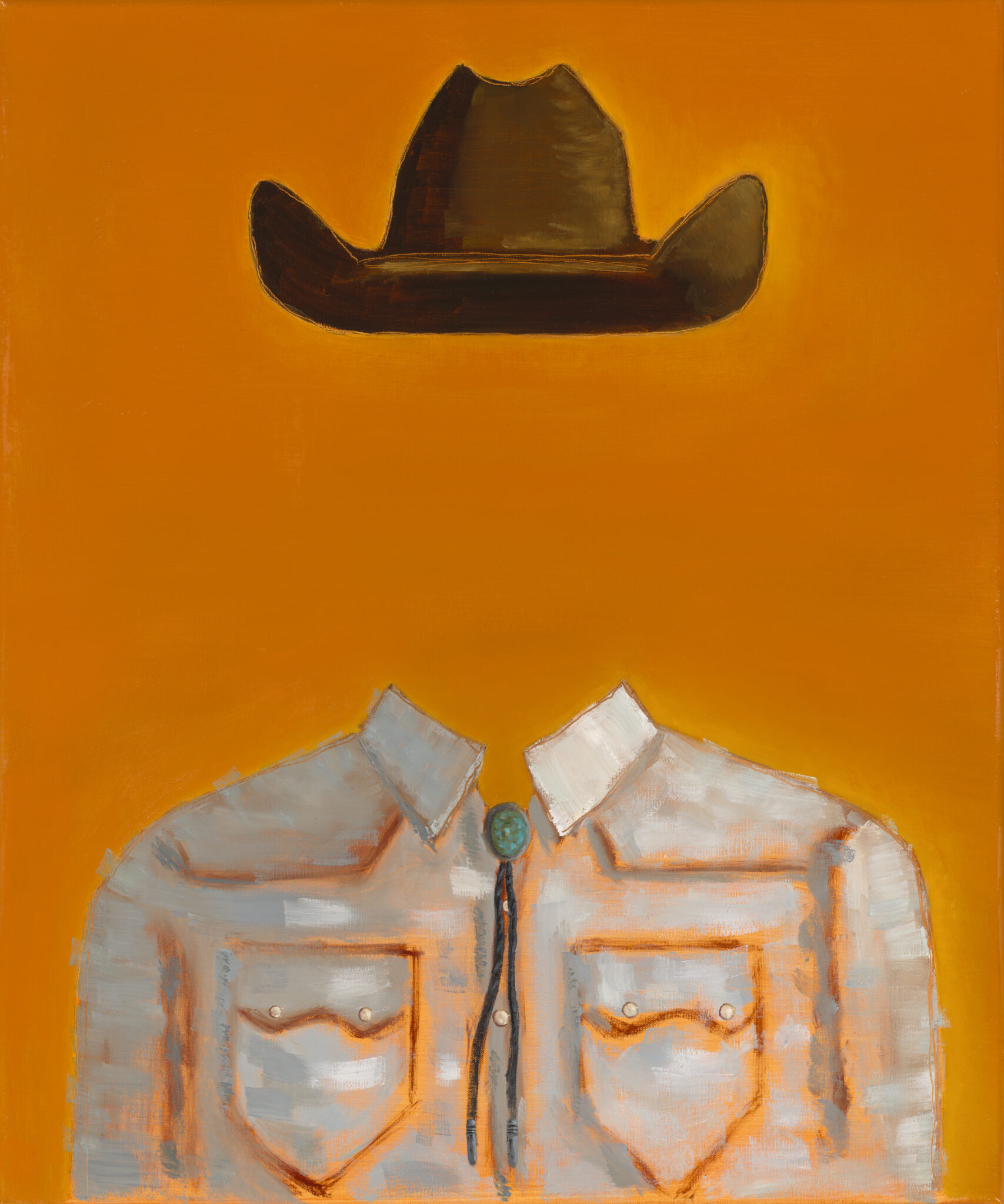
Last week, I bought one of his prints, titled “Faceless Cowboy.” It’s sparse, haunting, and a little mischievous. The composition is simple—a floating hat, a western shirt with no one inside—but the feeling lingers. It reminded me of Wyatt’s coaching style: clear, confident, but always with something deeper going on.
That print led to a conversation I’d been meaning to have with Wyatt. And what struck me is this: he’s now apprenticing in a whole new craft—but moving through the journey with the same kind of focused discipline that got him through those first 10,000 hours on deck.
We talked about leaving coaching, learning to paint through YouTube, a transformative trip to Japan, and how his years in swimming shaped the way he now shows up at the easel, day in and day out.
Here are the highlights of our conversation.
The Moment of Departure
That men’s 200 IM final at Trials—Carson and Shaine going 1–2—was unforgettable. What were you thinking during the medal ceremony, standing beside Eddie for what turned out to be your final meet, together?
I had known for some time—probably close to nine months—that my final meet with Texas and Eddie would be the Olympic Trials in 2024. There were a lot of emotions going into it for a variety of reasons—not least of all, it being Trials! But to have that kind of ending was really special and couldn’t be scripted. Watching Carson make his first Olympic team earlier in the meet, then witnessing the pure grit Shaine showed throughout the week to secure his ticket in his final race, was incredible. Sharing a spot on deck with both of them and Eddie at the end—it felt like a storybook ending.
After a run like that—five NCAA titles, seven Olympians, Associate Head Coach at Texas—it would’ve been easy to double down on the coaching path. Why didn’t you?
The truth is, stepping away from Texas wasn’t easy. I love that place, and I gave so much of myself to it for so many years. Just to be clear, this has nothing to do with Eddie. What we built together, and who he is to me, will always mean the world. But over time, things shifted. The landscape changed in ways I didn’t expect. And with everything that had unfolded in the couple of years prior, it felt like the program needed a reset. In that sense, leaving Texas felt like the right move. Walking away from coaching proved to be a lot more complicated.
I had some wonderful opportunities—many of which really excited me—but ultimately, I felt that I needed a reset from it all before I could pour myself back into it. Coaching, as Eddie once told me, isn’t a job—it’s a lifestyle. I didn’t feel like I could give my best to another program or another team. I didn’t feel like I could buy back into it being my life.
Another factor was that the NCAA was changing. Not all for the worse, but a lot of what attracted me to college coaching seemed a relic of the past. Team building, chemistry, truly investing in your swimmers—that’s all being replaced more and more with monetary bidding wars between schools. That’s not to say I don’t think athletes should make money. I’m just a hard believer in magic—the magic of recruiting people from different walks of life, different places, and ability levels, bringing them together under one banner, learning and growing and helping each other, with the hope of developing chemistry and camaraderie and doing things no one thought was possible. That magic seems to be disappearing—or at least becoming more rare.
The Spark of Something New
How did art begin to show up in your life? Was there a moment when you realized, “I need to follow this”?
It was Thanksgiving of 2023. My friends hosted a Friendsgiving and had the idea to do a sip-and-paint activity since none of us had painted before. This was right in the thick of recruiting season, and it was the first time in a long time I put my phone down and completely lost track of time. I think it’s what people mean when they talk about getting into a “flow state.” For a couple of hours, I didn’t reflexively check texts or emails or worry about missing a call. That was a truly freeing feeling—and that’s when I knew I wanted more of it.
You started posting your early work on Instagram—sketches, studies, oil pieces, experiments. What led you to share that process publicly, rather than keeping it private?
Oh man, I think the act of creating anything—art, music, writing, whatever—is such a deeply intimate experience. You’re wrestling with your own brain, body, and soul. It’s not always some effortless pouring out of yourself; more often, it feels like squeezing, wrestling, pressing.
The natural response is to keep it private—fear of people not liking it, fear of criticism, or maybe worse, fear of no response at all. But I realized that not sharing just fed those negative voices and sowed more self-doubt. That’s something I’ve struggled—and still struggle—with.
In many ways, sharing became something I needed to do. Embrace the doubts, fears, and unknowns. Stand at the edge of the cliff and jump. Build the parachute on the way down.
You’ve said YouTube was your art school. What were you watching, and what did that kind of learning teach you—about art or about yourself?
I eased into learning about oil painting for about a year, but during that time, I found an artist named Chris Fornataro, who uploaded lessons and paint-alongs on YouTube. His channel was called The Paint Coach—which felt hilariously fitting—and I just really connected with his teaching style. It clicked.
It was a broad introduction to painting: styles, techniques, master painters, mediums, brushes—all of it. It sounds a little cheesy, but it opened my eyes to whole other worlds. I had been so swept up and consumed by swimming for so much of my life that I just didn’t really think about anything else. I felt like Alice dropping through the rabbit hole into Wonderland.
Visual Language and Creative Influence
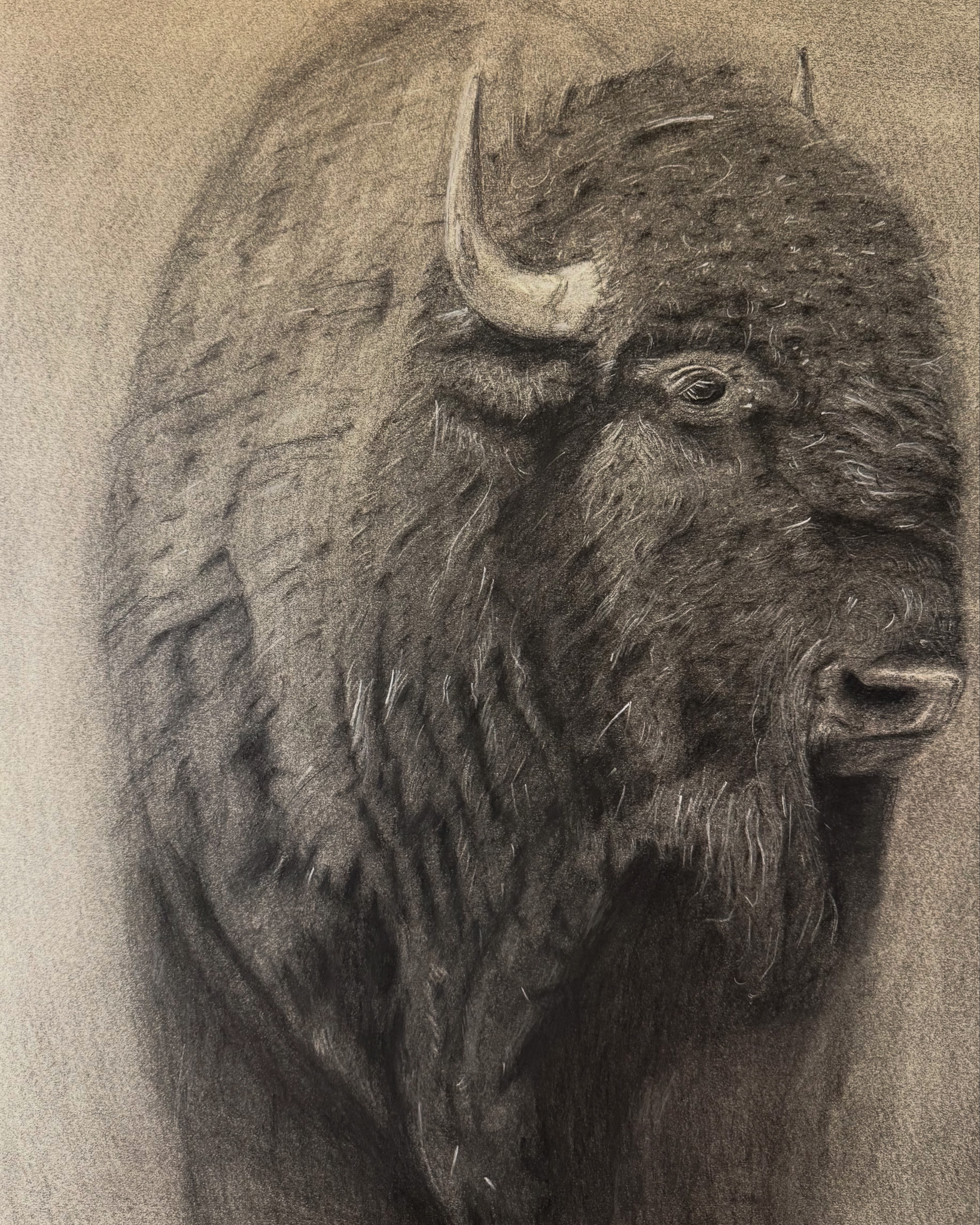 Much of your work blends Texas tradition with Japanese ritual—especially pieces like the charcoal bison or the quiet poolside photo. Where does that combination come from, and how does it show up in your creative process?
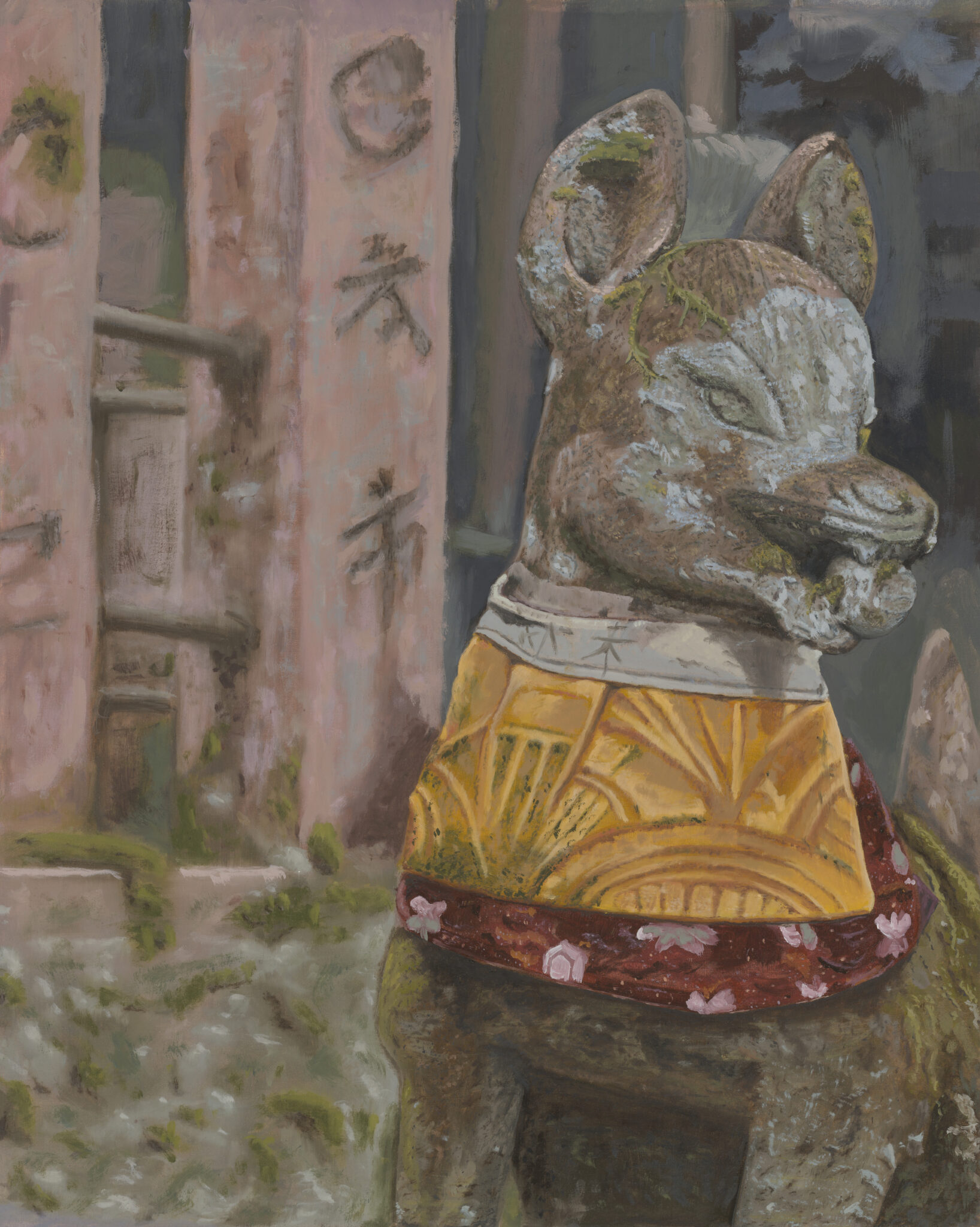
I’ve fallen head over heels for Texas—the lifestyle, the traditions, the people. It’s a place with a rich heritage and history, a deep connection to the land, and a strong emphasis on resilience and individuality. It might seem like an unlikely pairing, but I started to notice similarities between Texas and Japan—and wanted to bring those two worlds together.
For me, it’s about honoring Texas and telling some of its stories through art, while embracing a level of discipline and passion that’s deeply rooted in Japanese culture.
Could you tell me about your trip to Japan? Your photos from that time had this calm, almost meditative energy. Did something shift for you there?
Japan was a really transformational trip for me. My best friend Dan and I had talked about doing it for years, but we never found the time because of my coaching schedule. When I realized I was stepping away from that career, we knew it was the right moment. It was the end of something, maybe the beginning of something else, and a perfect opportunity to experience something new.
I was blown away by so much there, but two things really stuck with me. One was the deep reverence for nature that’s woven into Shinto beliefs. The other was this cultural commitment to perfecting one’s craft, whatever it may be.
There’s this cocktail bar I’ll never forget. It may seat 10 people. One guy ran the whole place—owner, bartender, cleaner, everything. Every morning, he’d go to the market and pick out the best fresh fruit, lay it out on the bar, and you’d pick one. Then he’d make you a custom cocktail based on that fruit. Seven bucks. And it was incredible.
That kind of care and intentionality is everywhere in Japan. In the U.S., we’d have six people working there, a corporate owner, and a $21 drink. The difference was clear: in Japan, I saw people genuinely pursuing their passions—and living them.
Faceless Cowboy feels like a signature piece—simple, playful, and philosophical. What’s the story behind it?
There’s not a single story behind it, really. I had been focused on portraiture for a while—getting proportions right, learning color theory, and studying the works of portrait masters. I loved how expressive the face could be.
But after I stopped coaching, I started to play with the idea of removing facial features. How many features can you lose and still have it resemble someone? And yeah, it’s not lost on me that removing the face is really about removing identity. I think I was wrestling with that myself: who am I without swimming or coaching?
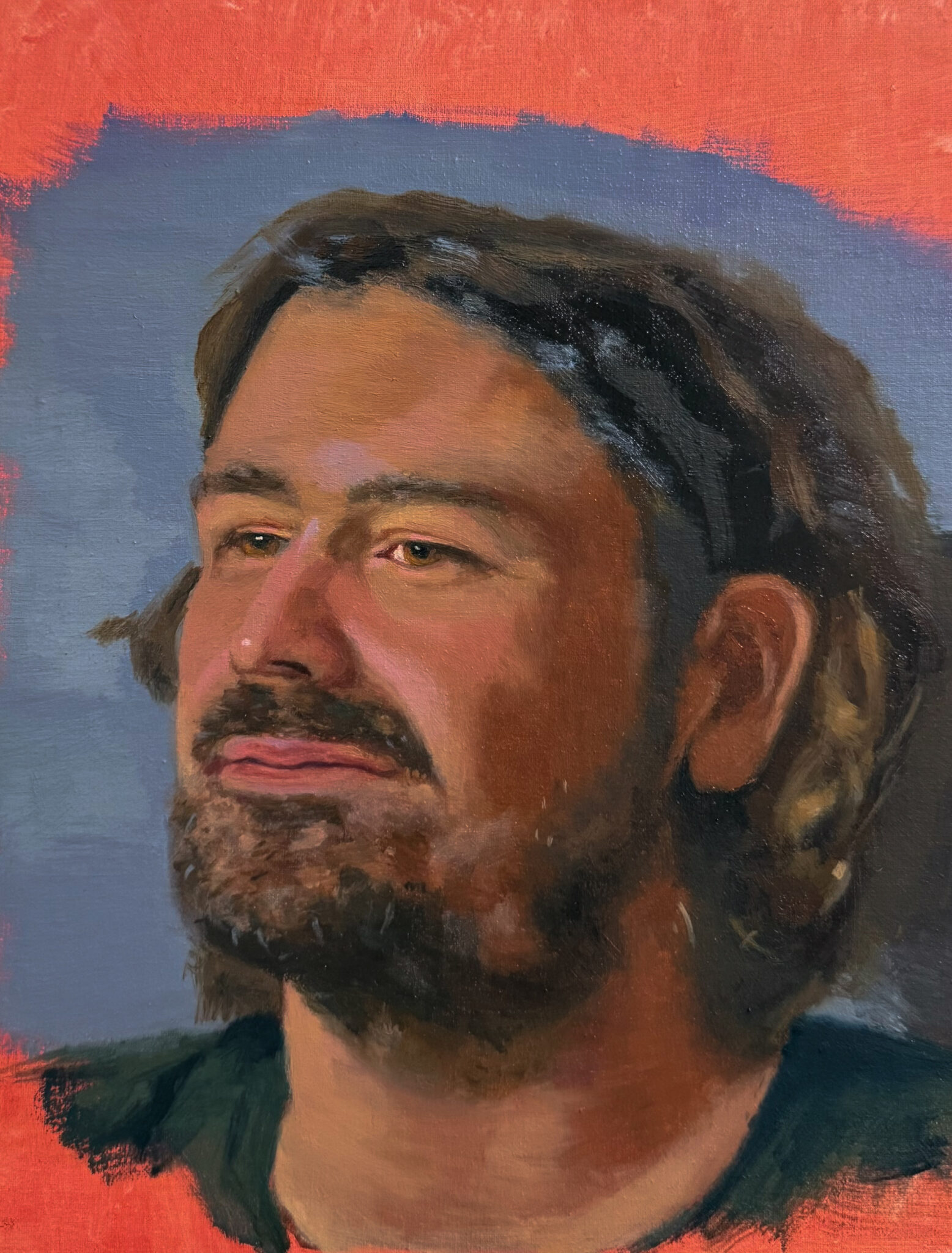 That portrait of Will Glass (Texas All-American, 2013-2017) has a different energy—looser brushwork, warmth, and a sense of familiarity. What’s it like painting someone you know so well in a totally new context?
Painting someone—especially a portrait—is one of the best ways to really learn about them. You stare at their face for hours, whether in person or through a photo. With someone I know, like Will, I feel like I get to bring memories and shared experiences into the painting. In a way, it’s cheating. You’re painting more than what’s in front of you—you’re painting what you know about them.
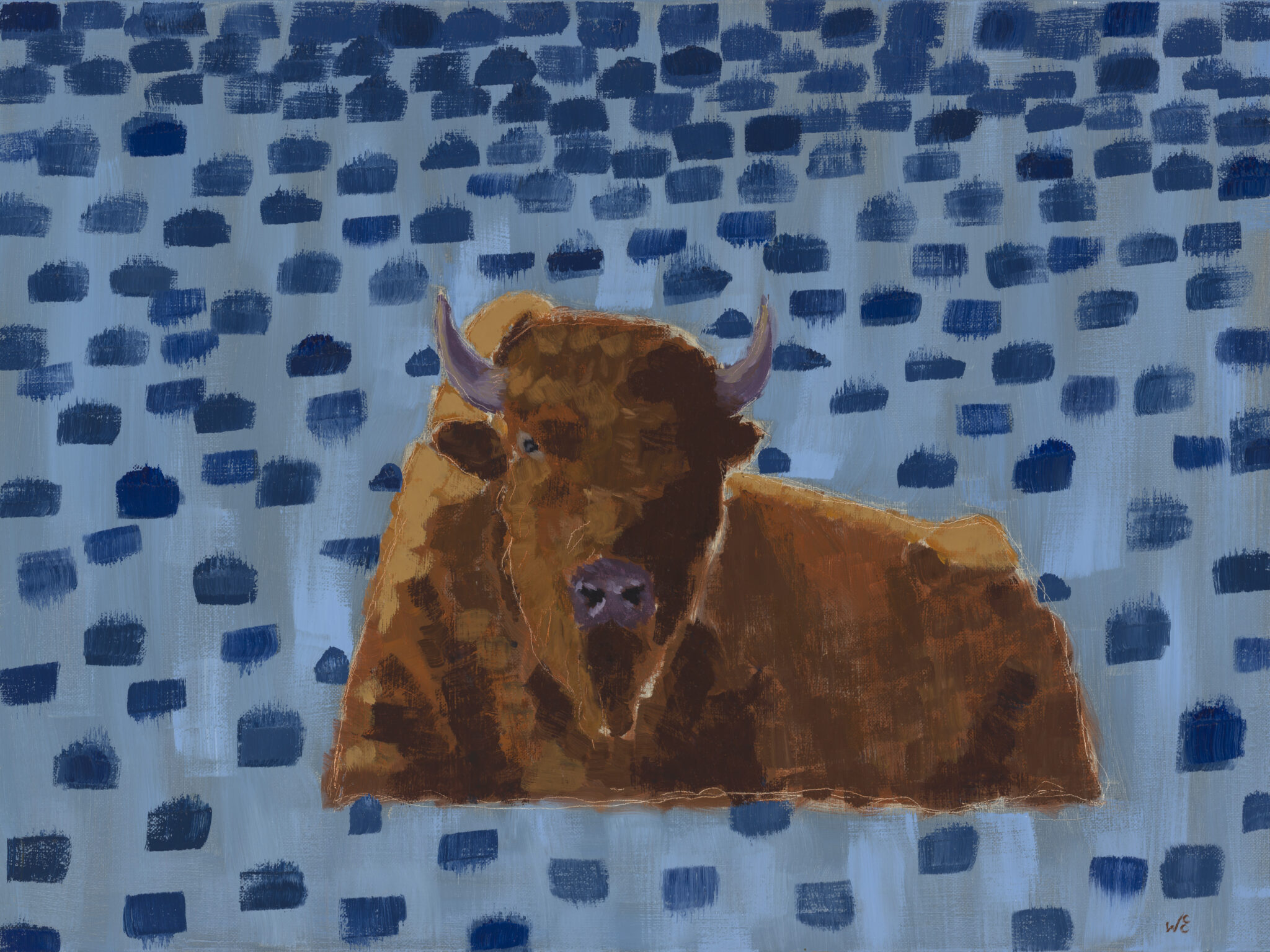
The charcoal bison is so disciplined—almost sculptural. And then there’s Bison on Green, which is all color and shape. What’s going on in your head when you work in those two totally different modes?
They’re just really different styles, and I love being able to explore both. The charcoal pieces are very disciplined—layering, blending, and carefully building form. Bison on Green was the opposite: big brush, short strokes, no blending. It was fast and expressive.
Charcoal is my comfort zone. When I hit a creative rut, I go back to it. It’s like building confidence through structure. Oils are still a bit chaotic for me. Sometimes, I’m halfway through and have no idea what I’m doing—but that’s part of the fun. It’s building the parachute during freefall.
Philosophy, Process & Studio Life
Do you approach your work like a series or a story? Or are these one-off explorations, each with its own vibe?
Most of them are explorations—experiments with style, medium, or technique. They all carry their own stories, but they’re not necessarily interconnected.
MISOGI itself is a Japanese purification ritual. Why did that word feel right for this chapter of your life?
It felt right for so many reasons. Yes, it’s a Shinto purification ritual, but it also involves water—traditionally, standing under a freezing waterfall in the forest. That connection to water made sense to me, and so did the idea of cleansing or starting fresh.
My last few years at Texas were a lot. By the end, I didn’t really recognize myself. I wanted to reset. The idea behind misogi is to purify yourself through something difficult or uncomfortable. Leaving the swimming world and pursuing something completely different—that’s been its own kind of misogi.
Are you approaching these works as finished ideas, or are they part of a bigger process? Is MISOGI STUDIO a brand, a body of work, or a life shift?
Honestly, I think it’s all one giant process. I just want to keep evolving, learning, and trying new things. I never want to be boxed in as one specific kind of artist.
And as for MISOGI—I don’t even fully know what it is yet. It’s new. That’s what makes it exciting—and a little terrifying.
Discipline and Reinvention
Do you still find yourself thinking in sets, intervals, rhythms—just now in a studio instead of on a timer?
 That’s a great question. When I started painting, I loved that there was no clock—no stopwatch, no intervals. But eventually, I realized time still matters in the art world. Figure classes are timed. Alla prima painting is all about time. People always ask, “How long did it take you?”
I still think in two-hour chunks, which is definitely a holdover from my coaching days. But it’s not sets and intervals anymore.
You’re not just stepping away from swimming and coaching. You’re stepping into something that takes just as much discipline but with no timer on the wall. Do you still consider yourself an athlete or a coach? Or are you building something new entirely?
I no longer consider myself an athlete or a coach. I’m a student again. A sponge.
What’s been the biggest surprise so far—about making art, or about yourself?
Much of creating art involves daily practice, experimentation, and repetition. There’s a myth that it’s all about sudden inspiration, but most of it is just showing up and doing the work.
About myself? I’ve learned that comparison really is the thief of joy. Social media is great for sharing and getting inspired—but it can also mess with your head. It’s easy to see someone else’s work and wonder if you’ll ever be that good. I haven’t found the perfect balance yet, but I’m working on it.
What’s next—for your art, your studio, or just your own growth?
I’ll be part of a charity gallery in Austin on August 9th. One of my good friends, Alex Kennedy, owns a design and apparel studio called Mondegreen. He hosts this event every year, donating 50% of the proceeds to the American Foundation for Suicide Prevention.
What’s your version of “the daily practice” right now? What are the rituals or routines that keep you grounded and moving forward, even when it’s not easy?
My goal is to do something creative every day—even if it’s small. Most days that means getting something into the sketchbook. Sometimes, that happens early in the day and warms me up for bigger pieces. On other days, just opening the sketchbook feels like a victory.
I used to think being creative meant making a finished painting every day. That’s just not realistic. Now, I believe creativity can emerge through reading about color theory, listening to a podcast, or simply doodling for a while. Every small action is like pouring water into a bucket. Eventually, it spills into something bigger.
Last question—do you think you’re done coaching? Or is this just another lap in a longer race?
The million-dollar question. I don’t think I’ll ever be too far from a pool—I grew up with one in the front yard. My dad is a coach; my brother is a coach. It’s part of who I am.
But for now, I’m enjoying exploring life outside the swim world. There’s a whole wild and wacky world out there.
For the entire week beginning on Monday, July 14, Wyatt will be donating 100% of the proceeds from his shop, MISOGI, to The Community Foundation of The Texas Hill Country to support the victims of the flood disaster.
About the Author
Paul Walker is an entrepreneur based in Austin, Texas. A lifelong swimmer and supporter of Texas and Olympic sports, he sees the pool as a place where discipline, clarity, and community meet. He trains and competes with Longhorn Aquatics Masters and, like every aging swimmer, is eyeing his next age group with optimism. Paul got to know Wyatt first as a swim fan, then as a fellow swimmer, then as a swim parent, and now as a friend. The sport has shaped Paul’s life and that of his family, and he remains committed to helping protect and elevate it—one lap (or story) at a time.

Lovely.
Blown away by this story! It is not often that we experience life with people that have such depth of thought and are willing to share. The sensitivity that Wyatt expresses and that was drawn out by Paul is inspirational. The willingness to break free of the constraints placed on us by circumstance and past experience and break through onto new platforms that allow one to find new expressions of the human spirit that is within us all – if we only have the courage and resolve to do so. Thanks for telling this story!
Swimming is fortunate to have a fair number of folks with artistic skills on deck and with a brush.
In addition to Wyatt’s obvious expressive ability, former world record holder and UofA coach Rick DeMont and long-time Arizona Swimming presence Mike Maczuga have shared extensive portfolios of wonderful artistic production.
Might be kind of a fun SwimSwam project to put together a ‘show.’
The sport of swimming is very lucky to have had a person like Wyatt making an impact on our athletes over the years. I am so excited to watch his talents continue to blossom as an artist. Thank you for an inspiring article!
Wyatt sorta transcends by his example what happens in a concrete hole in the ground filled with water. So many people seem wrought with identity in swimming. Wyatt Collins get it and his outspoken example bears consideration.
Amazing article highlighting a great human and powerful art.
I think many on this site can probably relate to the challenge of finding purpose “after swimming”, and the joy that can come from that struggle and journey!
Thanks so much for the beautiful update on Wyatt!!! I love knowing he is happy and thriving!!
What a powerful reflection on identity, reinvention, and the courage it takes to begin again. Your impact as a coach was extraordinary but what’s just as inspiring is your willingness to let go, get uncomfortable, and explore who you are beyond the pool. It takes real tenacity to honor the call to evolve, and your journey is a potent reminder that growth often starts where certainty ends. Cheering you on as Misogi Studio unfolds!