
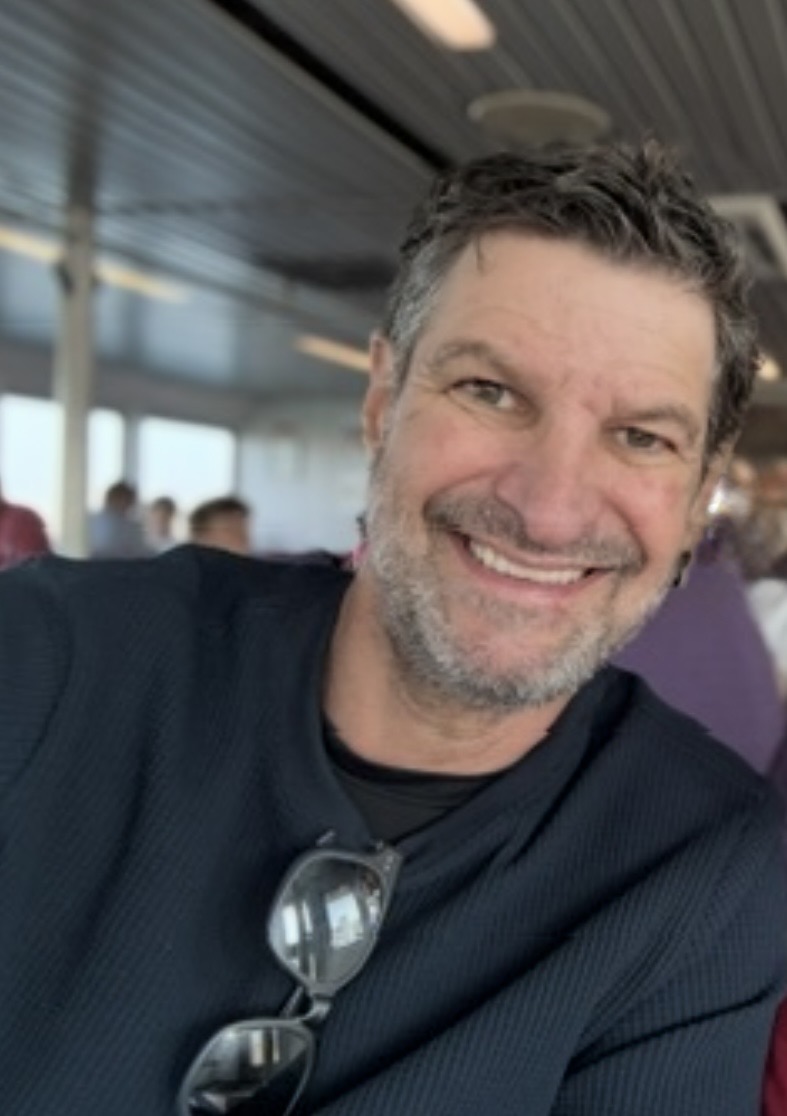
Courtesy: Mark Helman
Last Saturday I swam 10 kilometers across Newfound Lake in Bristol, New Hampshire.
The swim was part of Swim with a Mission, an organization that supports veterans and their families. Each swimmer gets a bracelet with the name of a fallen service member. Mine was Army PFC Clinton Springer II, who was killed in Afghanistan in 2010 at the age of 21.
I finished in 3 hours, 51 minutes.
The swim itself lasted less than four hours.
The real event lasted six months.
Over the past half year I averaged 4.4 swims per week.
That average includes vacation weeks, a few sick days, a brief trip to the hospital, work, family, and every excuse that could have interrupted the plan.
Consistency in showing up—not reading, planning, or overthinking—got me to the starting line. Everything else was academic.
The academic part, however, turned out to be fascinating.
Swimming long sessions with so much to think about led me to writing.
Writing made me ask better questions.
Better questions led me to experiment with technique, training, nutrition, pacing, and mindset.
Posting on substack made me think of others, not just me.
I joined Dedham Masters in February and suddenly I wasn’t figuring everything out alone anymore. My coaches and lane mates accelerated my learning in ways I couldn’t have anticipated.
The practice became much bigger than swimming.
Race morning felt magical.
The air was cool.
The lake was perfectly calm.
Newfound Lake is spring-fed and remarkably clear. Looking down during each stroke, I could see my hands with crystal clarity as shafts of sunlight dissolved into the lake’s deeper green.
It felt less like racing than being invited into someplace beautiful.
By race week, my body had no more training left to do. My mind did.
I watched interviews with Michael Phelps and Adam Walker.
One idea from Phelps stuck with me.
He described winning his first gold medal at the 2008 Olympics. Even while standing on the podium listening to the national anthem, he deliberately put that race behind him.
His goal wasn’t one gold medal.
It was eight.
He refused to let success distract him from the larger mission.
Deliberately putting milestones behind me became my race strategy.
The course consisted of five buoys, each one kilometer apart. Out and back.
I decided each buoy would become its own race.
Reach it.
Forget it.
Start over.
The first buoy arrived in eighteen minutes.
Four minutes faster than my goal.
I was surprised I made it there at that pace, then mentally erased it.
Next buoy.
Same process.
By the halfway turn I reached 5 kilometers in 1 hour, 44 minutes, far ahead of the pace I had imagined.
Eventually fatigue arrived.
My shoulders became heavy.
My stroke shortened.
The beach seemed unwilling to get any closer.
Before the race I had chosen a mantra borrowed from Mark Divine, retired Navy Seal and author of several books including “Unbeatable Mind.”
“Easy Day.”
When my arms grew tired…
Easy Day.
When I started drifting off course…
Easy Day.
When two kilometers suddenly felt much farther than two kilometers…
Easy Day.
Somewhere late in the swim I stopped thinking about finishing.
I looked down at the lake bottom and imagined I was simply on a treadmill.
Keep moving the belt.
The destination will arrive when it’s ready.
A kayaker had been paddling beside me for the last several kilometers to keep me safe.
At one point I looked up and joked,
“Am I winning?”
She laughed.
“You’re not losing!”
It was exactly the encouragement I needed.
When I finally stood up in waist-deep water after nearly four hours of swimming, I realized something.
The swim had gone by faster than six months of training.
The race wasn’t the accomplishment.
The practice was.
Yesterday simply revealed what the practice had already built.
I crossed the finish line forty minutes faster than my training swim.
But that’s not the number I’ll remember.
I’ll remember discovering that consistency is more powerful than motivation.
That curiosity can become training.
That writing can make swimming better.
And that sometimes the biggest finish line is the one you’ve been quietly crossing, one ordinary workout at a time, for months.
Mission accomplished.
Screenshot
ABOUT MARK HELMAN
Mark Helman came to swimming as an adult and now trains with Dedham Masters near Boston. He writes Coached by Water, an exploration of swimming, deliberate practice, and what the water can teach us about living well. He recently completed a 10-kilometer open water swim after six months of training, and is currently working toward his two-millionth lifetime yard.

Well done brother!
Your writing is excellent. Congratulations on reaching your goals and for supporting your country’s veterans. Hope you keep writing!